Clean Water Act Section 402; 40 CFR 122.26; EPA Multi-Sector General Permit; EPA Construction General Permit; state NPDES permits
Stormwater Pollution Prevention Awareness
Stormwater awareness: storm drains and illicit discharges, industrial and construction NPDES permits, the SWPPP, good housekeeping, spill response, erosion and sediment controls, concrete washout, inspections, corrective actions, and vehicle and fueling areas.
What's covered
- 1.Stormwater Pollution Prevention
- 2.Storm Drains, Illicit Discharges, and Non-Stormwater
- 3.Industrial Stormwater Permits
- 4.The Stormwater Pollution Prevention Plan
- 5.Construction Site Stormwater
- 6.Good Housekeeping
- 7.Spill Prevention and Response
- 8.Erosion Control Practices
- 9.Sediment Controls and Inlet Protection
- 10.Construction Materials, Washout, and Waste
- 11.Inspections and Visual Monitoring
- 12.Corrective Actions and Records
- 13.Vehicles, Fueling, and Maintenance Areas
- 14.Scenario: Pressure Washing the Loading Dock
- 15.Scenario: Storm in the Forecast on a Construction Site
- 16.Scenario: An Oily Sheen at the Outfall
- 17.Scenario: The Contractor Who Removes Inlet Protection
- 18.Your Role in Clean Water
Key takeaways
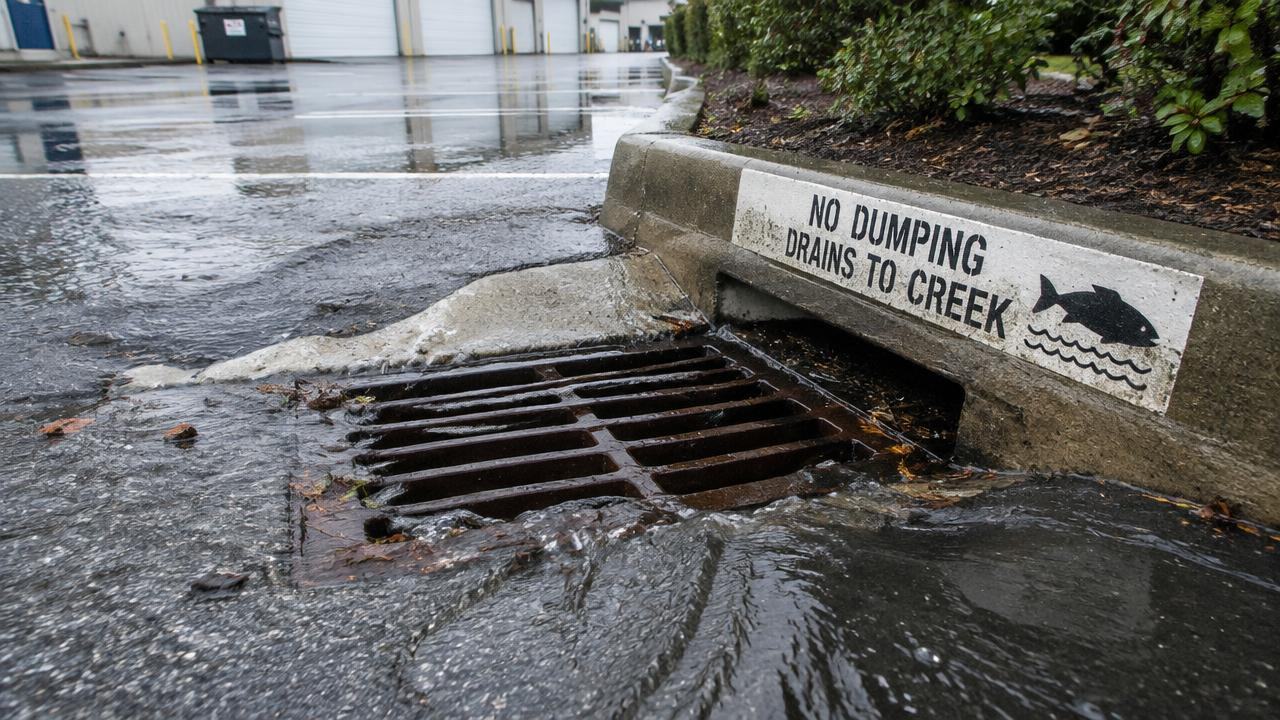
- Only rain down the storm drain; most drains flow untreated to waterways.
- Industrial facilities and construction sites of one acre or more generally need NPDES stormwater permits.
- The SWPPP is the site’s legal plan; know where it is and which controls you maintain.
- Sweep instead of hosing, and keep materials, waste, and dumpsters covered.
- Block drains, contain, and dry-clean spills; report them right away.
- Erosion controls keep soil in place; sediment controls and inlet protection catch what moves.
- Contain concrete washout and vehicle wash water — never send them to storm drains.
- This course does not qualify you to write or certify a SWPPP or perform permit inspections; your employer provides site-specific training.
Every course includes
Professional narration, synced captions, a knowledge-check quiz, completion records, and certificates of completion for team learners. Works on phone, tablet, and computer.
This is awareness-level training only. It does not certify, qualify, or authorize anyone to perform work and does not by itself establish compliance. The employer is responsible for site-specific training, hands-on verification, and work authorization.