29 CFR 1926.600, 1926.602, 1926.651, 1926.1001; 8 CCR 1590–1596, 3653; 49 CFR 393.130
Skid-Steer & Mini-Excavator Safety
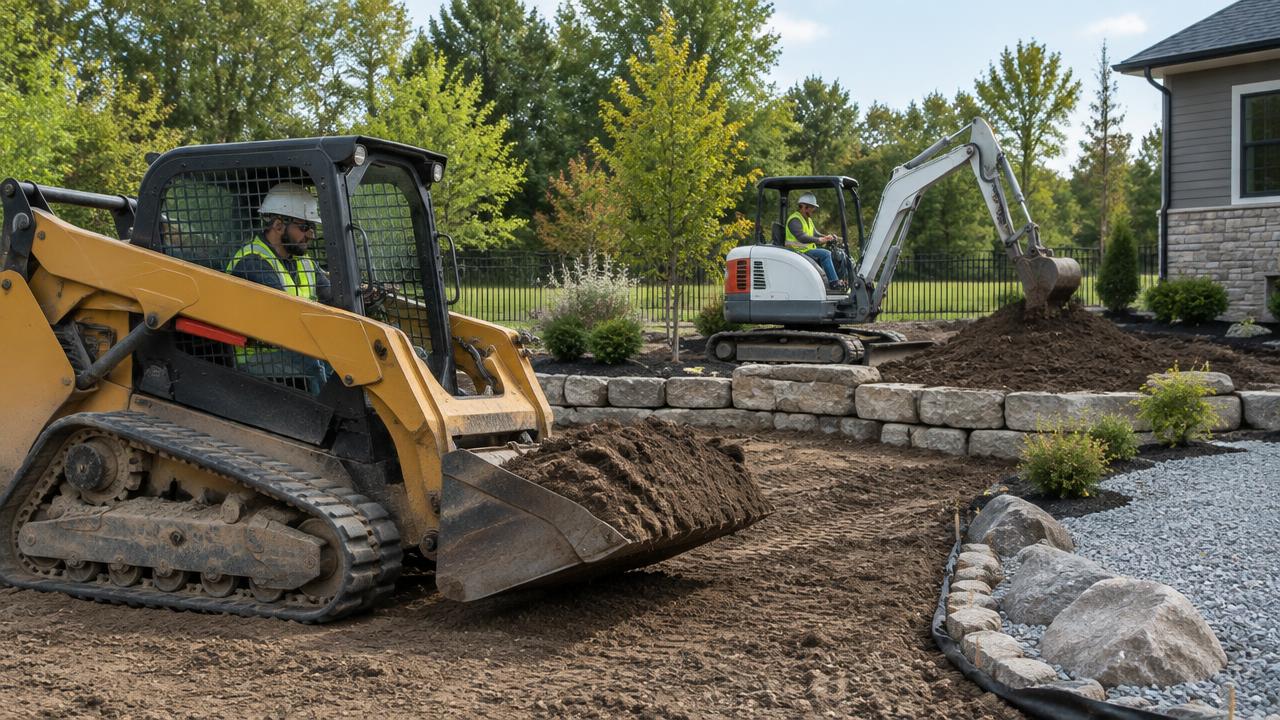
Skid-steer and mini-excavator hazards: rollovers, crushing under raised loader arms, swing-radius struck-by and pinch points, pre-use inspection, ROPS and seat belts, slopes and edges, digging and 811, attachments and quick couplers, and loading and securing machines on trailers.
What's covered
- 1.Skid-Steer & Mini-Excavator Safety: Scope
- 2.How People Get Hurt
- 3.Pre-Use Inspection
- 4.Getting In and Out, ROPS and Seat Belt
- 5.Preventing Rollovers
- 6.Never Under Raised Arms
- 7.Mini-Excavator Swing Zone
- 8.Digging Safely
- 9.Attachments
- 10.Loading onto a Trailer
- 11.Securing the Load for Transport
- 12.Authorized Operators and Takeaways
Key takeaways
- Inspect the machine before each shift and never bypass a seat bar or interlock.
- Enter and exit with the bucket flat on the ground; wear the seat belt so the ROPS can protect you.
- Carry loads low, travel straight up and down slopes with the heavy end uphill, and stay back from edges.
- Never get under or beside raised loader arms; use the lift-arm support device for maintenance.
- Barricade the excavator swing radius and approach only after eye contact and a signal.
- Call 811 before digging and confirm attachments are locked on before lifting.
- Load trailers straight on, lower attachments to the deck, and secure heavy machines with at least four tie-downs.
Every course includes
Professional narration, synced captions, a knowledge-check quiz, completion records, and certificates of completion for team learners. Works on phone, tablet, and computer.
This is awareness-level training only. It does not certify, qualify, or authorize anyone to perform work and does not by itself establish compliance. The employer is responsible for site-specific training, hands-on verification, and work authorization.