29 CFR 1926.451(f), (g), 1926.452(w); 1910.132; ANSI/SAIA A92.20-2021, ANSI/SAIA A92.22-2021, ANSI/SAIA A92.24-2018
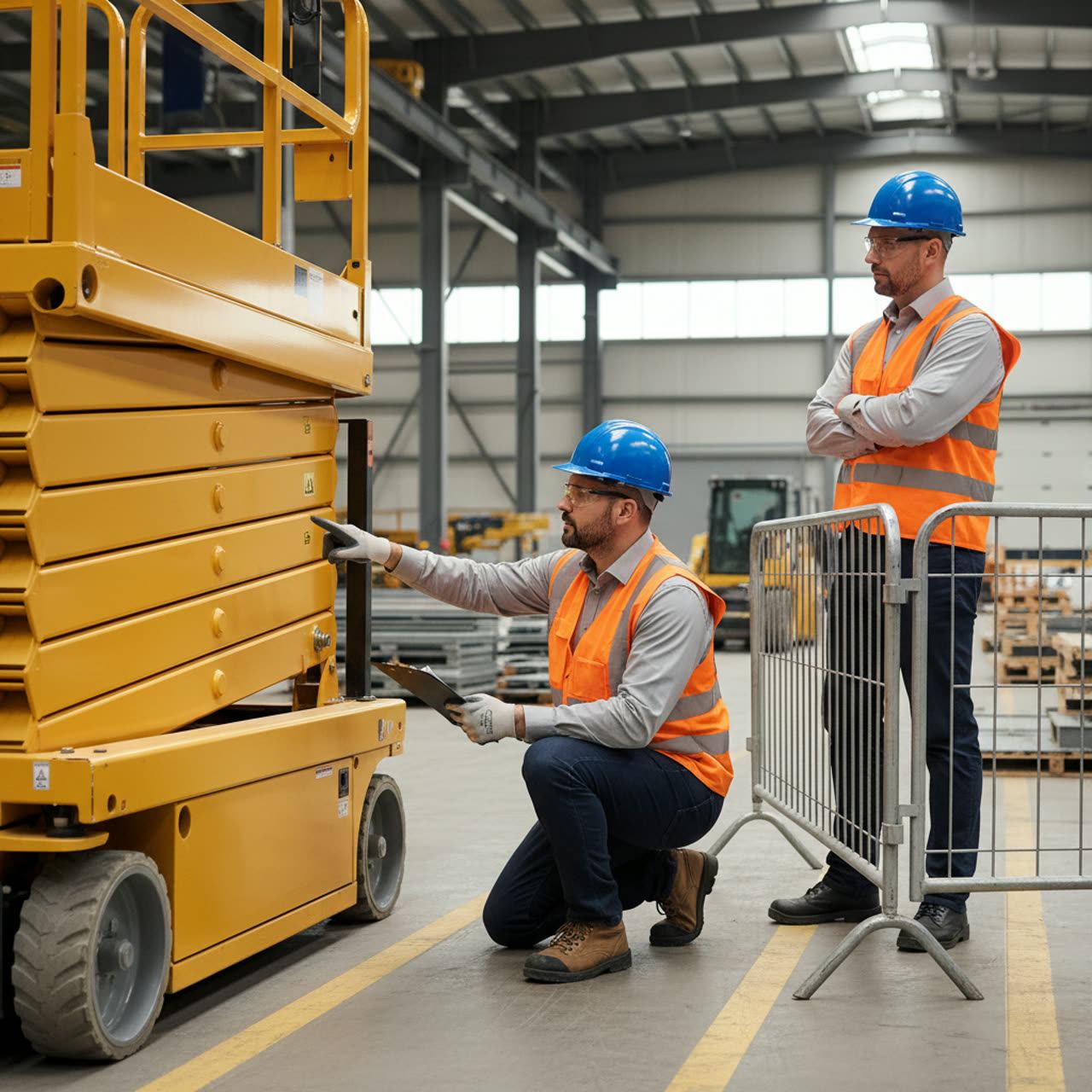
Scissor Lift Pre-Start Inspection (Detailed)
A detailed scissor lift pre-start inspection: out-of-service rules, inspection PPE, walkaround, decals and capacity plate, tires and pothole protection, scissor stack and hoses, guardrails and gate, battery and manual lowering, control and emergency stop tests, drive and safety devices, workplace inspection, and documentation.
What's covered
- 1.Scissor Lift Pre-Start Inspection
- 2.Defects and Out-of-Service Rules
- 3.PPE for Scissor Lift Inspections
- 4.Starting the Walkaround
- 5.Tires, Wheels, and Chassis
- 6.Scissor Stack, Cylinder, and Hoses
- 7.Platform, Guardrails, and Gate
- 8.Battery, Fluids, and Manual Lowering
- 9.Control Function Tests
- 10.Drive, Brakes, and Safety Devices
- 11.Workplace Inspection Before Use
- 12.Documenting and Reporting
Key takeaways
- Do a pre-start inspection and function test before every shift.
- Tag out defective lifts and remove the key.
- Wear eye protection and gloves for battery and hydraulic checks.
- Engage the maintenance safety arm before reaching into the scissor stack.
- Guardrails and self-closing gates must be complete and working.
- Test ground controls, emergency stops, tilt alarm, and brakes.
- Inspect the workplace for overhead hazards, holes, slopes, and wind.
Every course includes
Professional narration, synced captions, a knowledge-check quiz, completion records, and certificates of completion for team learners. Works on phone, tablet, and computer.
This is awareness-level training only. It does not certify, qualify, or authorize anyone to perform work and does not by itself establish compliance. The employer is responsible for site-specific training, hands-on verification, and work authorization.