OSHA 29 CFR 1910.145; 1926.200; 1926.201
Safety Signs and Barricades: Read, Respect, Respond
Recognize danger, caution, and safety instruction signs; understand temporary tags, restricted-area barricades, traffic controls, exit markings, reporting, and site-specific access rules.
13 minutes10 scenes10-question quiz
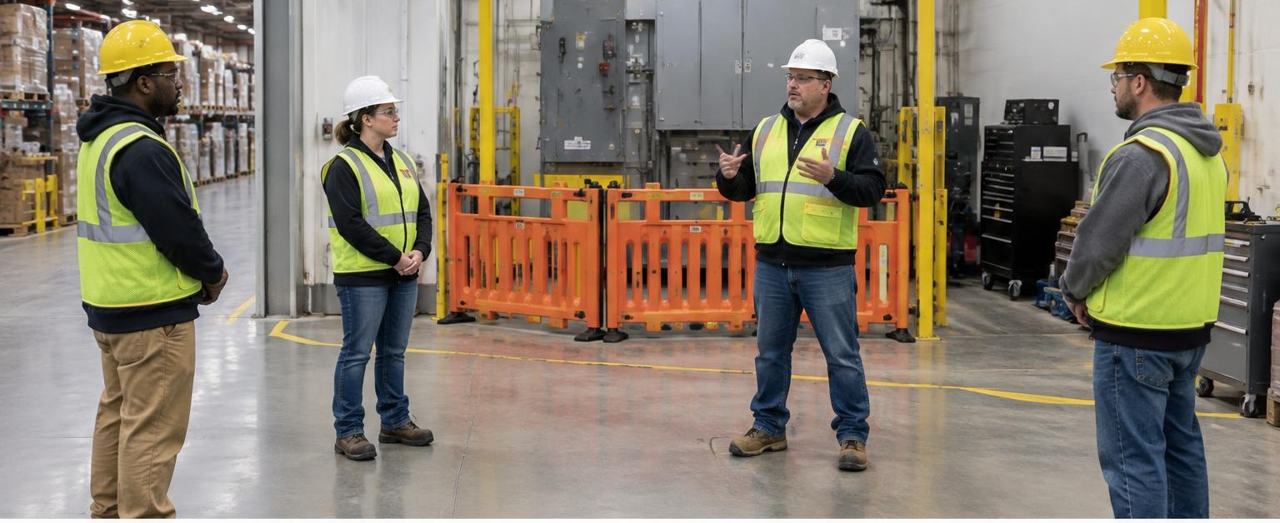
What's covered
- 1.Safety Signs and Barricades: Read Before You Proceed
- 2.Danger Means Immediate Hazard
- 3.Caution: Potential Hazards and Unsafe Practices
- 4.Safety Instructions Support Safe Work
- 5.Tags Identify Temporary Hazards
- 6.Barricades Are Boundaries, Not Universal Protection
- 7.Construction and Roadwork Controls
- 8.Exit Routes and Emergency Equipment
- 9.Inspect, Maintain, and Report
- 10.Stop, Read, Ask, and Follow the Site Plan
Key takeaways
- Read the full sign and respond before reaching the hazard.
- Danger indicates immediate hazards requiring special precautions.
- Caution warns of potential hazards or unsafe practices.
- Safety instruction signs communicate general safety measures.
- Tags identify hazards but do not replace signs or required energy isolation.
- Tape and portable barriers do not substitute for required fall protection.
- Construction traffic devices and flagging follow the OSHA-incorporated MUTCD and applicable requirements.
- Keep exit routes and emergency equipment accessible.
- Report missing, damaged, hidden, or unreadable signs and barriers without entering the hazard.
- Follow employer access, evacuation, and reporting procedures; awareness does not establish compliance or task qualification.
Every course includes
Professional narration, synced captions, a knowledge-check quiz, completion records, and certificates of completion for team learners. Works on phone, tablet, and computer.
This is awareness-level training only. It does not certify, qualify, or authorize anyone to perform work and does not by itself establish compliance. The employer is responsible for site-specific training, hands-on verification, and work authorization.