8 CCR 1725, 1726, 1727, 1740, 1512, 1514, 3382, 3384, 3395, 3203; 29 CFR 1926.150, 1926.153; International Fire Code (2024) Sections 303, 3305.10, 3504, 3505.6 (as locally adopted)
Torch-Applied Roofing & Hot Asphalt Safety
Awareness course on torch-applied and hot asphalt roofing: propane cylinder storage, securing, hoisting, connections and leaks, torch handling, hidden fire spread, fire watch and roof extinguishers, kettle placement and attendance, moving hot asphalt, burn protection and first aid, asphalt fumes and heat, and emergency response.
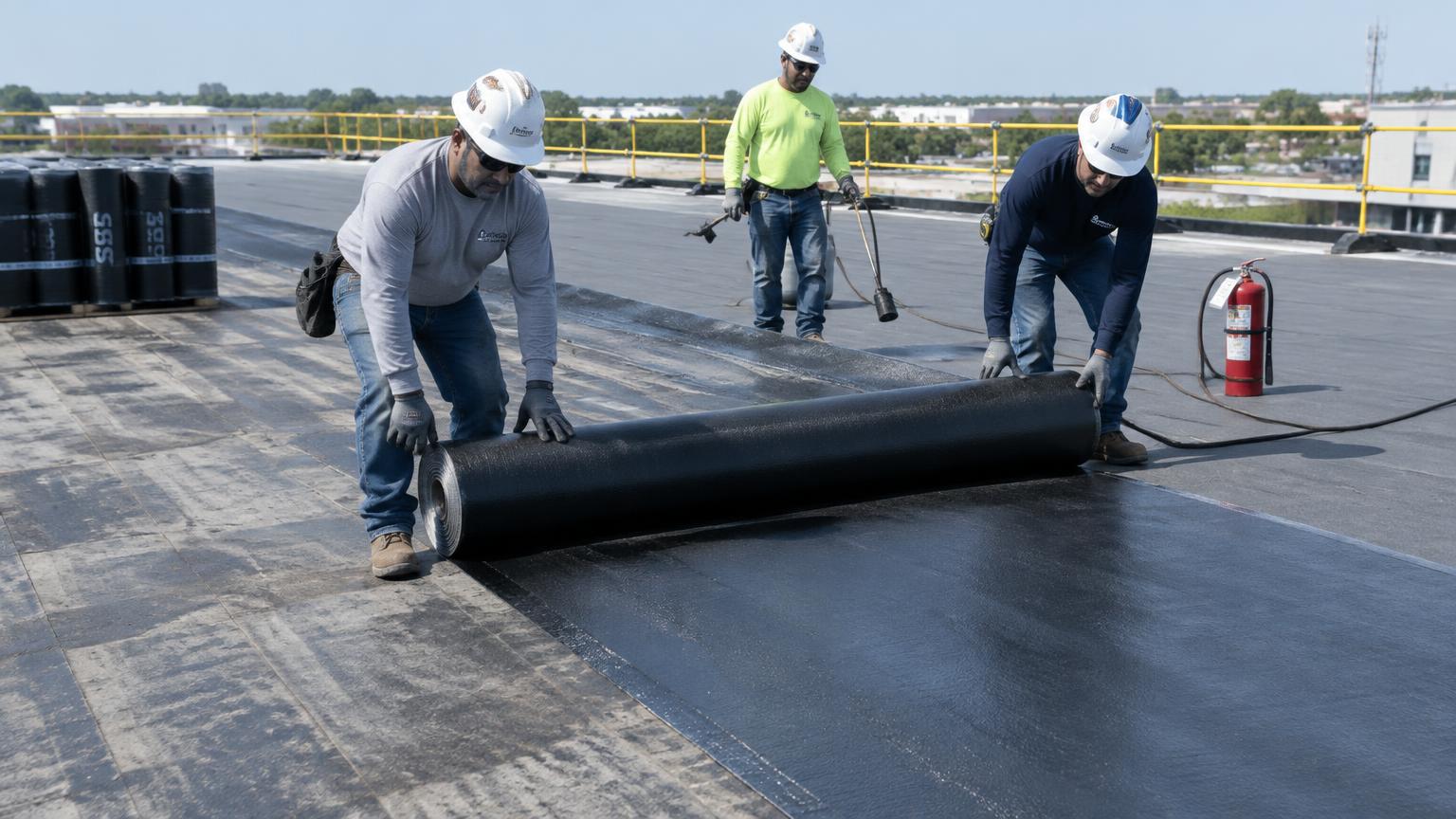
What's covered
- 1.Torch and Hot Asphalt Roofing: What This Course Covers
- 2.Propane Cylinders: Storage, Securing, and Hoisting
- 3.Connecting, Leak Checks, and Hoses
- 4.Torch Handling on the Roof
- 5.Hidden Fire Spread
- 6.Fire Watch and Roof Extinguishers
- 7.Asphalt Kettles: Placement and Attendance
- 8.Moving Hot Asphalt
- 9.Burn Protection and PPE
- 10.When Someone Is Burned
- 11.Asphalt Fumes and Heat Stress
- 12.Emergencies and the End of the Shift
Key takeaways
- Propane cylinders stay valve end up, secured, protected from heat, and are hoisted only in a cradle, net, or skip box.
- Crack valves from the side, open them slowly, and tag out a cylinder that keeps leaking.
- Keep the flame on the membrane and off flashings, walls, and gaps where hidden fires start.
- A fire watch lasts at least 30 minutes after torching ends under the fire code, and longer when required.
- A 3-A:40-B:C extinguisher belongs on the roof being covered; a B:C extinguisher and spigot extension handle belong at the kettle.
- Kettles stay attended, lidded, stable, and away from buildings and openings.
- No hot asphalt buckets on ladders, and fill them no closer than four inches from the top.
- Cool asphalt burns with water right away, never peel the asphalt off, and get medical care.
Every course includes
Professional narration, synced captions, a knowledge-check quiz, completion records, and certificates of completion for team learners. Works on phone, tablet, and computer.
This is awareness-level training only. It does not certify, qualify, or authorize anyone to perform work and does not by itself establish compliance. The employer is responsible for site-specific training, hands-on verification, and work authorization.