8 CCR 5144, 5155, 5194, 3382, 3384, 1514, 1730, 3203; 29 CFR 1910.134, 1926.501(b)(10); OSHA Isocyanates safety and health topic; International Fire Code (2024) Section 3504.2.1 (as locally adopted)
Spray Polyurethane Foam Roofing Awareness
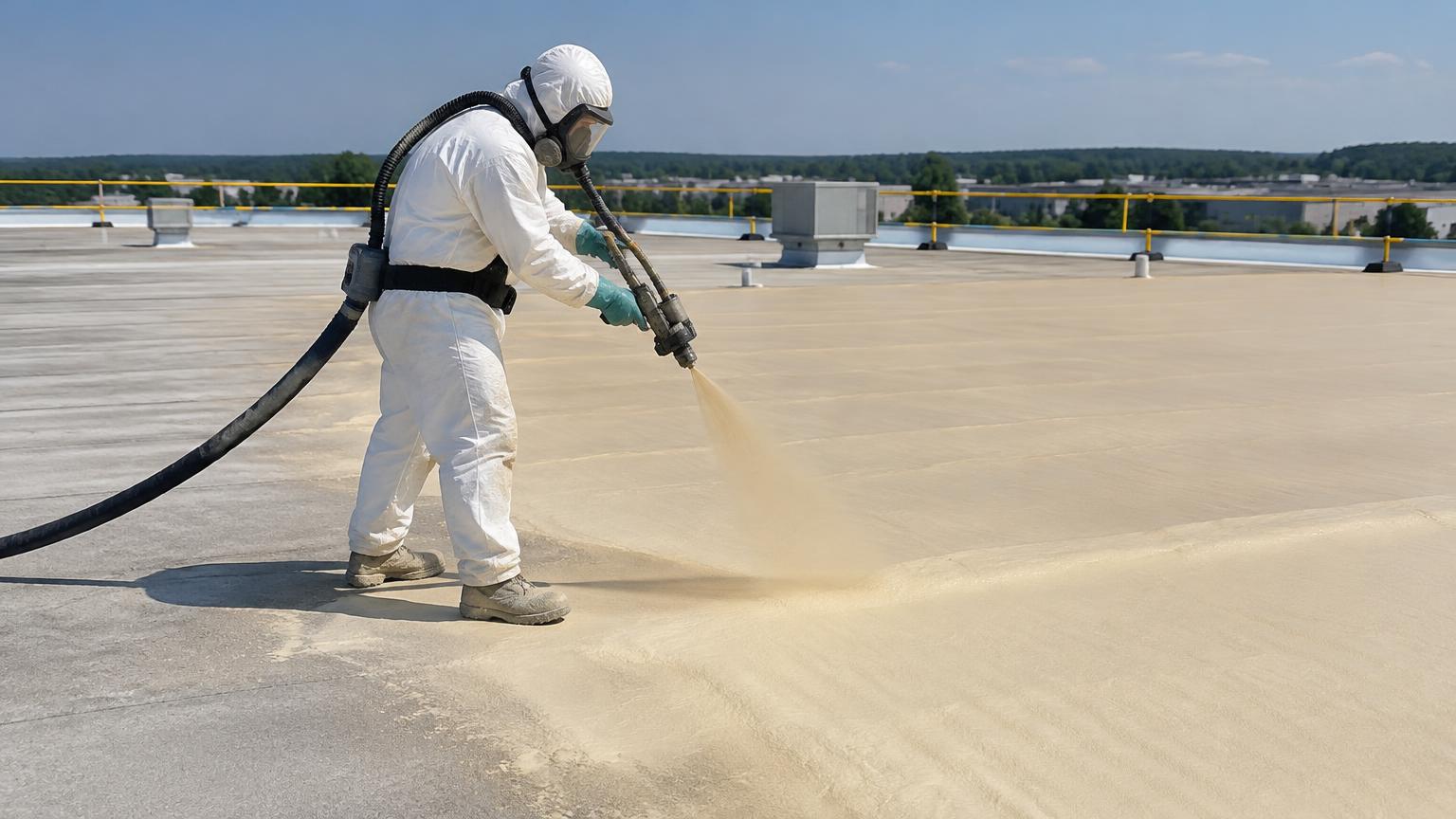
Awareness course on spray polyurethane foam roofing: A-side isocyanates and B-side blends, health effects and sensitization, California exposure limits, overspray and wind, restricted areas and re-entry, ventilation, respiratory protection, skin and eye protection, labels and safety data sheets, equipment and fire hazards, and falls, spills, and emergencies.
What's covered
- 1.Spray Foam Roofing Awareness: What This Course Covers
- 2.What Is in the A-Side and B-Side
- 3.How Isocyanates Affect the Body
- 4.Exposure Limits
- 5.Overspray and Wind
- 6.Restricted Areas and Re-Entry
- 7.Ventilation and Air Movement
- 8.Respiratory Protection
- 9.Skin and Eye Protection
- 10.Labels, SDS, and Training
- 11.Equipment, Heat, and Fire
- 12.Falls, Spills, and Emergencies
Key takeaways
- The A-side usually contains isocyanates such as MDI, which can cause occupational asthma.
- Once sensitized, a worker can react to very small exposures; report symptoms early.
- California’s MDI limit is 0.005 ppm as an 8-hour average, and exposure should be kept as low as practical.
- Check wind, control overspray, and protect vehicles, openings, and air intakes.
- Mark and control the spray zone; re-entry depends on the product and employer decision, not a universal clock.
- Respirator users need a written program, medical evaluation, and fit testing before use and at least yearly.
- Cover skin and eyes with gear chosen from the SDS, and remove it without spreading contamination.
- Foam can burn: keep hot work controlled and extinguishers ready, and keep fall protection in place on low-slope roofs.
Every course includes
Professional narration, synced captions, a knowledge-check quiz, completion records, and certificates of completion for team learners. Works on phone, tablet, and computer.
This is awareness-level training only. It does not certify, qualify, or authorize anyone to perform work and does not by itself establish compliance. The employer is responsible for site-specific training, hands-on verification, and work authorization.