8 CCR 1724, 1730, 1731, 1509, 1510, 1620, 1670, 1671.1, 1671.2, 3276, 3203; 29 CFR 1926.502(i); Cal/OSHA Tailgate Topics: General Roofing and Roofing Fall Hazards (Residential), December 2025
California Roofing Safety & Fall Protection
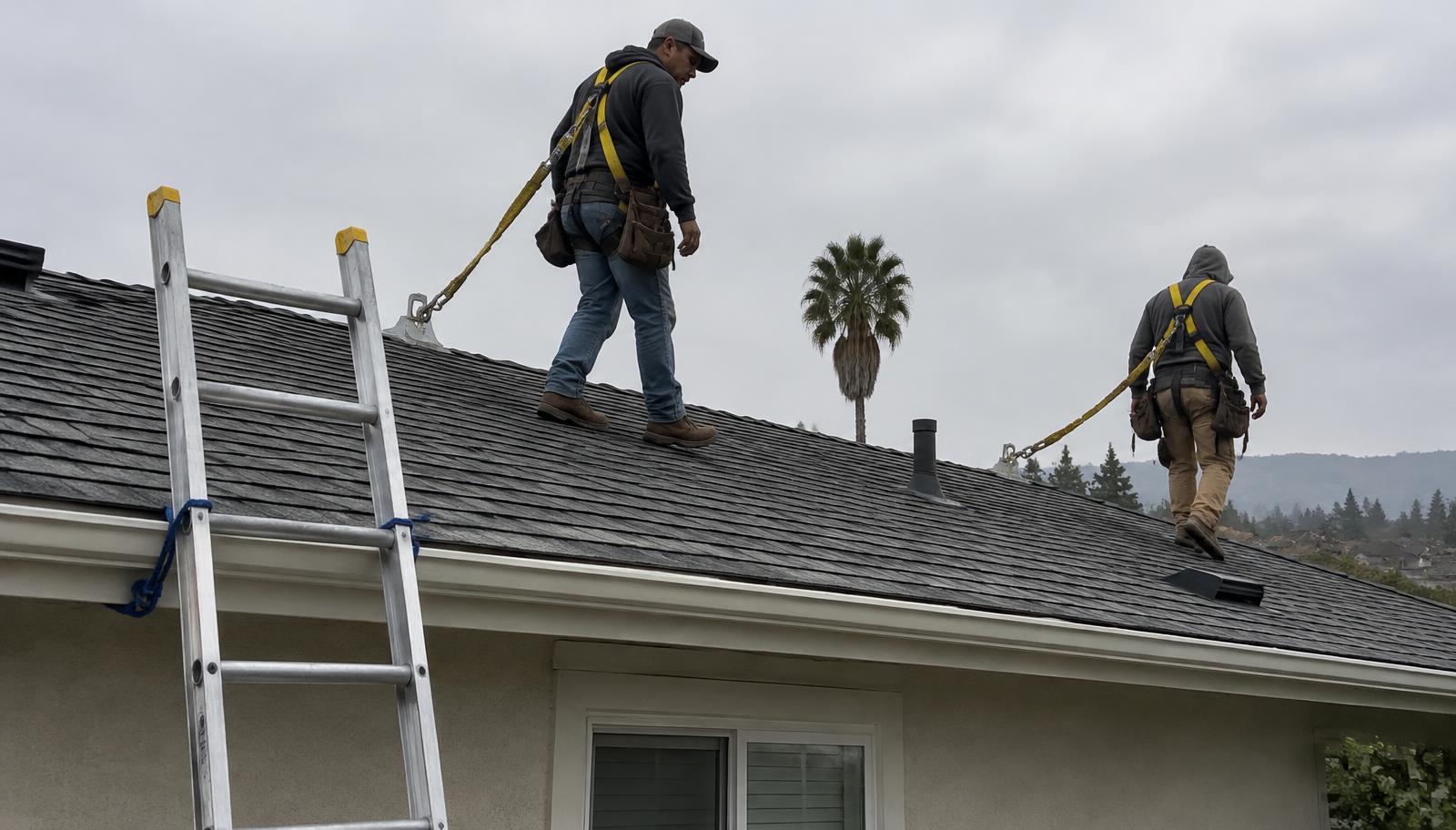
Awareness course on California roofing fall protection: which rulebook applies to residential versus non-residential roofs, the height and slope triggers, the protection menu, roof jacks and crawling boards, catch platforms and eave barriers, personal fall arrest strength and rigging rules, inspection and rescue, skylights and covers, ladder access, and fall protection plans with safety monitors and controlled access zones.
What's covered
- 1.California Roofing Safety: What This Course Covers
- 2.Which Rulebook Applies to Your Roof
- 3.Residential Roofs: When Protection Is Required
- 4.Non-Residential Roofs: Heights, Slopes, and Warning Lines
- 5.The Protection Menu: What Actually Holds a Person
- 6.Roof Jacks and Crawling Boards
- 7.Catch Platforms, Scaffolds, and Eave Barriers
- 8.Personal Fall Arrest: What Has to Hold
- 9.Inspect It, Clip It, and Plan the Rescue
- 10.Skylights, Roof Holes, and Covers
- 11.Ladders and Getting On and Off the Roof
- 12.Plans, Monitors, Zones, and the Paper Trail
Key takeaways
- Know which rulebook governs your roof: Section 1731 for residential-type roofing, Section 1730 for non-residential roofing operations.
- On residential roofs, protection is required at six feet on slopes up to 7:12, and at any height on slopes steeper than 7:12.
- Non-residential roofs generally require protection above twenty feet — by parapet, personal fall protection, catch platforms, scaffolds, eave barriers, or railings.
- Warning lines and control lines warn people; they never arrest a fall.
- Lanyards and lifelines: 5,000 pounds. Anchors: 5,000 pounds per employee, or engineered with a safety factor of two by a qualified person.
- Inspect your system before every use, and keep documented competent-person inspections at least twice a year.
- Rescue arrangements are settled before clipping on — a hanging worker can lose consciousness, sometimes quickly.
- Covers over holes and skylights must hold twice the load, stay secured, and be marked HOLE or COVER; never walk on a skylight.
Every course includes
Professional narration, synced captions, a knowledge-check quiz, completion records, and certificates of completion for team learners. Works on phone, tablet, and computer.
This is awareness-level training only. It does not certify, qualify, or authorize anyone to perform work and does not by itself establish compliance. The employer is responsible for site-specific training, hands-on verification, and work authorization.