RCRA; 40 CFR Parts 260–262, 268, 273, 279; 49 CFR 172.704
Hazardous Waste Management Awareness (RCRA)
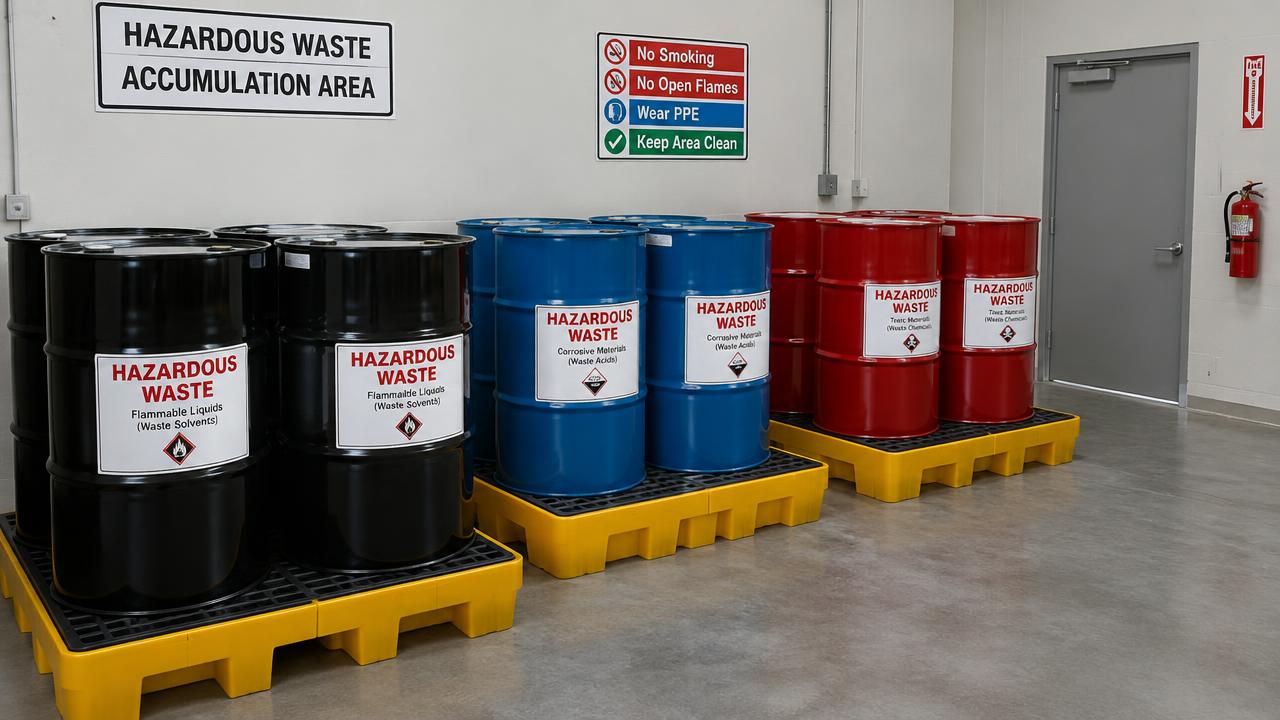
Hazardous waste awareness under RCRA: identifying listed and characteristic wastes, generator categories, satellite and central accumulation, containers, labeling, weekly inspections, manifests, universal waste and used oil, emergency preparedness, and training responsibilities.
What's covered
- 1.Hazardous Waste Management Awareness
- 2.What Makes a Waste Hazardous
- 3.Common Hazardous Wastes at Work
- 4.Generator Categories
- 5.Satellite Accumulation Areas
- 6.Containers: Condition, Compatibility, and Closure
- 7.Labeling and Marking
- 8.Central Accumulation Areas and Weekly Inspections
- 9.Safe Handling and Personal Protection
- 10.Manifests and Shipping Waste Off Site
- 11.Universal Waste and Used Oil
- 12.Emergency Preparedness and Spill Response
- 13.Training, Records, and Your Responsibilities
- 14.Scenario: The Unlabeled Drum
- 15.Scenario: The Overflowing Satellite Container
- 16.Scenario: Mixing Wastes and the Down-Drain Shortcut
- 17.Scenario: Preparing for an Inspection Visit
- 18.Putting It Together: Daily Waste Practices
Key takeaways
- Generators stay responsible for hazardous waste from cradle to grave.
- Hazardous wastes are listed (F, K, P, U) or show ignitable, corrosive, reactive, or toxic characteristics.
- Generator category sets storage time limits, quantity limits, and training rules.
- Satellite containers stay at or near the point of generation and are always closed except when adding or removing waste.
- Mark every container “Hazardous Waste” with its hazards, and date it in central accumulation.
- Inspect central accumulation areas at least weekly and report problems right away.
- Never pour waste down drains, mix incompatible wastes, or dilute waste.
- This course does not authorize waste determinations, manifest signing, or HAZWOPER work; your employer provides site-specific training.
Every course includes
Professional narration, synced captions, a knowledge-check quiz, completion records, and certificates of completion for team learners. Works on phone, tablet, and computer.
This is awareness-level training only. It does not certify, qualify, or authorize anyone to perform work and does not by itself establish compliance. The employer is responsible for site-specific training, hands-on verification, and work authorization.