29 CFR 1910.242, 1910.243, 1910.334, 1910.132–133, 1910.147; 1926.300–304, 1926.404, 1926.1153; Cal/OSHA Title 8 §3203; ANSI Z87.1-2025; NFPA 70 (2026)
Power Tool Safety: Inspect, Guard, Control
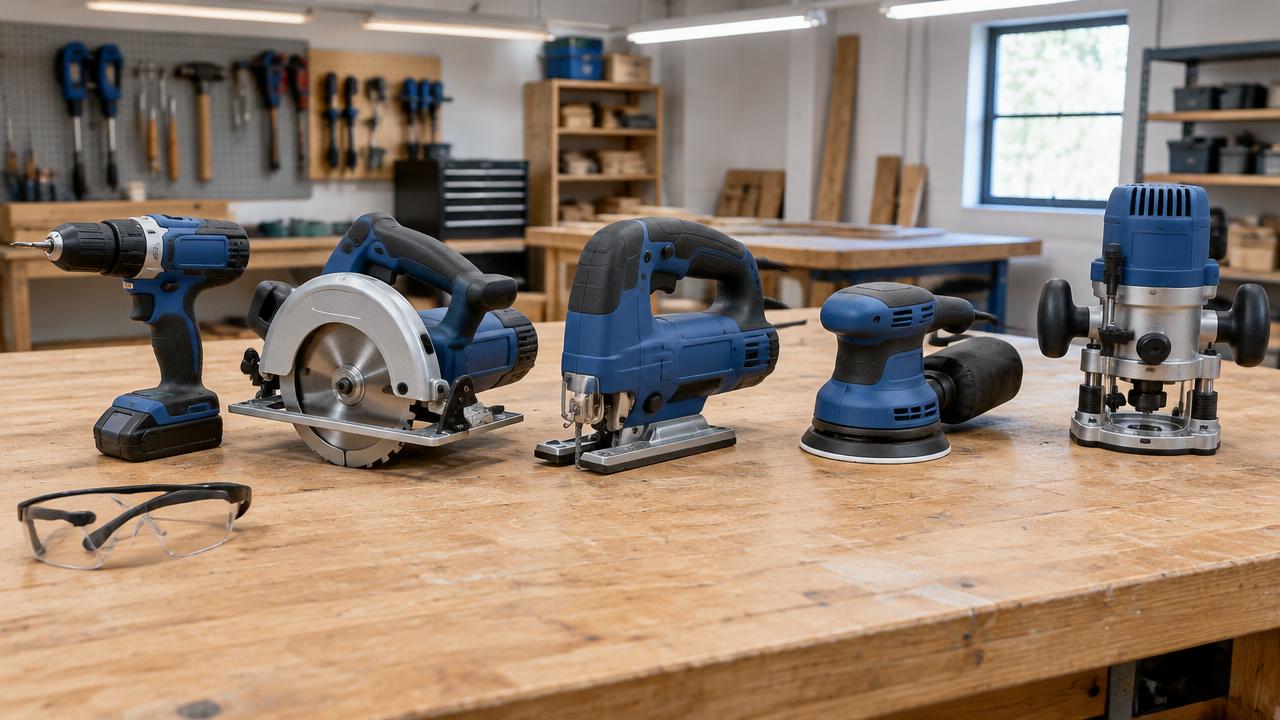
General portable power tool safety: injury causes, responsibilities, tool and accessory selection, pre-use inspection, cords and grounding, GFCI protection, switches, guards, drills, circular saw kickback, reciprocating and oscillating saws, routers and sanders, lithium-ion batteries, PPE, silica and vibration, and safe servicing. Grinders, nail guns, powder-actuated tools, and compressed air are covered in separate courses. Awareness level; hands-on evaluation on actual tools is still required.
What's covered
- 1.Power Tool Safety
- 2.How Power Tools Injure
- 3.Who Is Responsible
- 4.Choose the Right Tool and Accessory
- 5.Inspect Before Every Use
- 6.Cords, Plugs, and Grounding
- 7.GFCI Protection and Wet Locations
- 8.Switches and Controls
- 9.Guards: Never Remove Them
- 10.Drills and Drivers
- 11.Circular Saws and Kickback
- 12.Reciprocating, Jig, and Oscillating Saws
- 13.Sanders, Routers, and Planers
- 14.Cordless Tools and Lithium-Ion Batteries
- 15.PPE for Power Tool Work
- 16.Dust, Silica, and Vibration
- 17.Changing Accessories and Servicing
- 18.Recap: Right Tool, Good Condition, Guarded, Protected
Key takeaways
- Use the right tool and an accessory rated for its speed.
- Inspect before every use; tag damaged tools out of service.
- Use grounded or double-insulated tools with GFCI protection.
- Never remove, pin, or bypass guards or switches.
- Support the work and stand out of the kickback path.
- Wear ANSI Z87.1 eye protection, hearing protection, and control dust at the source.
- Unplug or remove the battery before changing or clearing anything.
Every course includes
Professional narration, synced captions, a knowledge-check quiz, completion records, and certificates of completion for team learners. Works on phone, tablet, and computer.
This is awareness-level training only. It does not certify, qualify, or authorize anyone to perform work and does not by itself establish compliance. The employer is responsible for site-specific training, hands-on verification, and work authorization.