OSHA 29 CFR 1910.215; 1910.243(c); 1926.300–303
Portable Grinder Safety: Inspect, Guard, Control
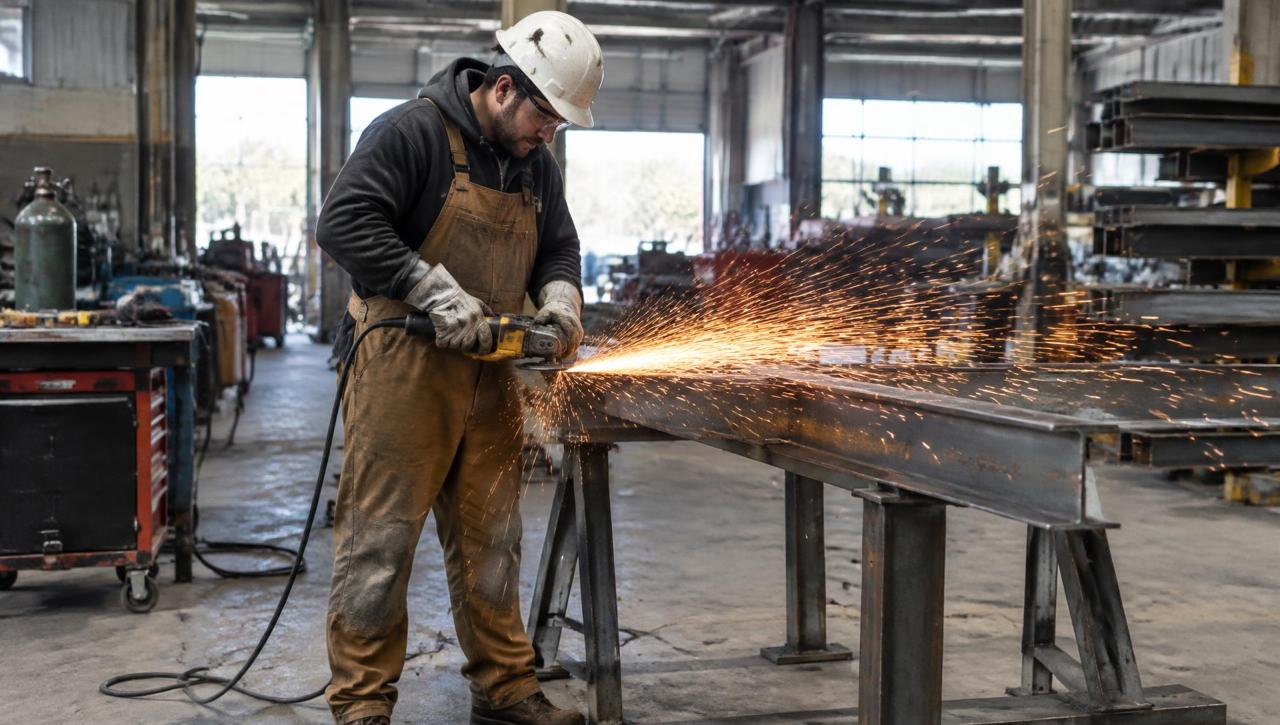
Portable (angle) grinder awareness covering disc and tool inspection, disc selection and speed ratings, mounting, guarding, PPE, two-handed control and kickback, cutting and grinding technique, spark and fire control, shutdown, and storage.
8 minutes8 scenes12-question quiz
What's covered
- 1.Portable Grinders: Small Tool, Serious Energy
- 2.Wear the Right Protection
- 3.Inspect the Tool and Disc First
- 4.Match the Disc to the Tool
- 5.Keep the Guard On
- 6.Control the Tool: Grip, Stance, Kickback
- 7.Cutting, Grinding, and Letting It Stop
- 8.Fire Safety, Shutdown, and Storage
Key takeaways
- Portable grinders combine high-speed discs with a handheld tool; treat them with the same respect as fixed machinery.
- Wear safety glasses with a face shield over them, plus hearing protection and task-appropriate gloves.
- Inspect every disc and the tool before use; remove damaged discs and defective tools from service.
- Match the disc type, diameter, arbor, and speed rating to the tool; never exceed the disc maximum speed.
- Keep the guard on and positioned between you and the disc; never remove it to fit a larger disc.
- Use both hands with the side handle, clamp the workpiece, and expect kickback when the disc pinches or binds.
- Grind with the wheel face and cut straight with cutoff wheels; never side-grind a cutoff wheel.
- Let the disc coast to a complete stop before setting the tool down.
- Clear flammables from the spark path, follow hot work rules, and check for smoldering after grinding.
- Disconnect power before changing discs, store discs flat and dry, and complete employer tool-specific training; awareness is not compliance.
Every course includes
Professional narration, synced captions, a knowledge-check quiz, completion records, and certificates of completion for team learners. Works on phone, tablet, and computer.
This is awareness-level training only. It does not certify, qualify, or authorize anyone to perform work and does not by itself establish compliance. The employer is responsible for site-specific training, hands-on verification, and work authorization.