OSHA 29 CFR 1926.302(b) / 1926.300–307
Nail Gun Safety
Recognize the situations that can lead to unintended nail discharge and puncture injuries. The course follows pneumatic and cordless nailer work from trigger identification and inspection through positioning, jam clearing, awkward work areas and injury reporting.
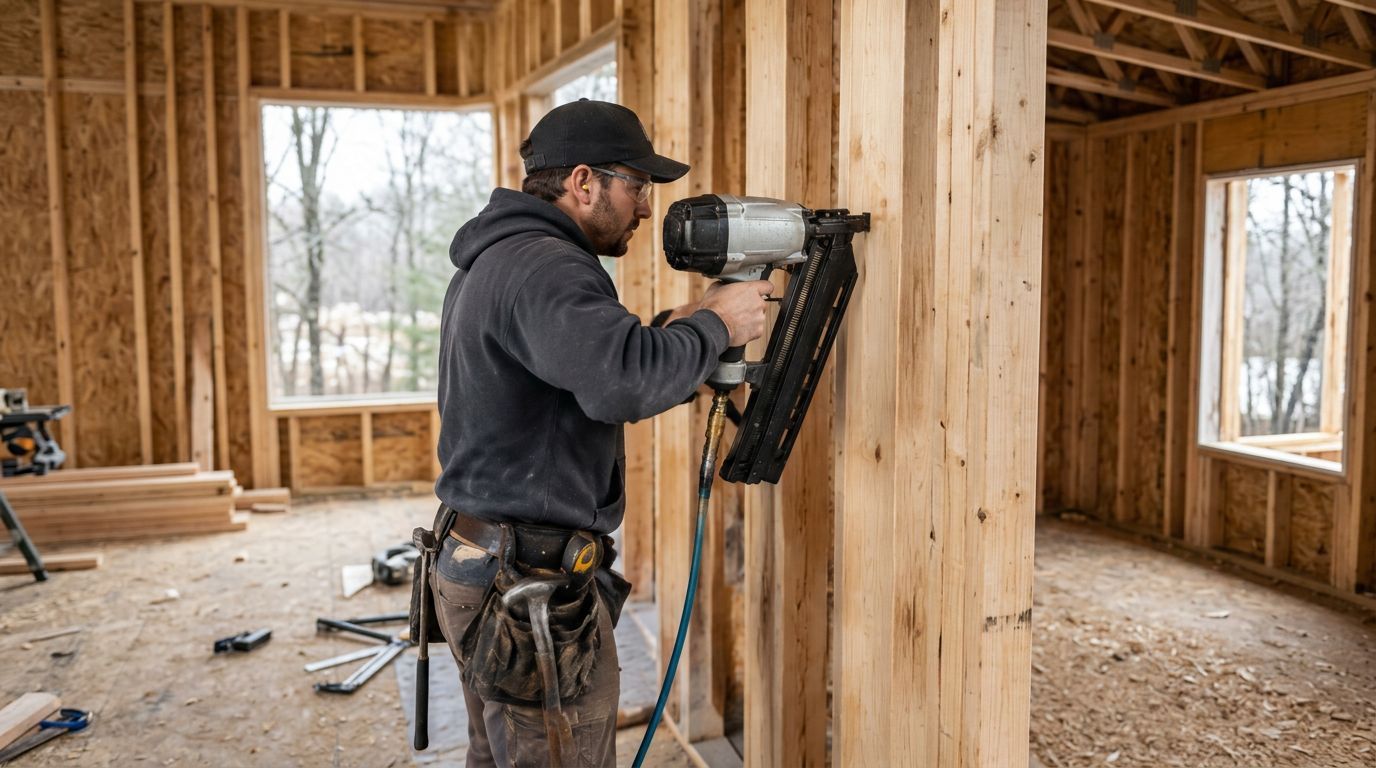
Who this course is for
Framing, roofing, and finish carpentry workers who use or work near pneumatic and cordless nailers
Designed for people who use or work near nailers in framing, roofing and finish carpentry. The lessons discuss sequential and contact triggers, knots, ricochets, blow-through, ladder and overhead work, and protective equipment. Tool-specific hands-on instruction remains the employer’s responsibility.
The listed duration is a course estimate. Pauses, review and the knowledge check can add time.
What's covered
- 1.Nail Guns: Fast, Common, and Dangerous
- 2.Trigger Types: The Biggest Control
- 3.Inspect and Disconnect
- 4.Safe Nailing Technique
- 5.Knots, Ricochets, and Blow-Through
- 6.Ladders, Overhead, and Awkward Positions
- 7.PPE, Training, and Site Rules
- 8.Put It Together: The Safe Nailing Cycle
Key takeaways
- Nail gun injuries are mostly hand punctures and follow predictable, preventable patterns.
- Sequential triggers fire only tip-first, trigger-second; contact triggers fire on any bump while the trigger is held.
- Know your tool’s trigger mode before connecting air or a battery.
- Disconnect the air hose or remove the battery before clearing any jam or adjustment.
- Tag out tools that double-fire, leak, or have sticky triggers.
- Keep the free hand clear of the nailing point and the possible nail exit path.
- Move nailing points away from knots; expect deflection and blow-through on thin material.
- Confirm no one is on the far side of sheathing or panels before nailing.
- Reposition instead of overreaching on ladders and overhead work.
- Eye protection is mandatory; get tool-specific training before first use.
Every course includes
Professional narration, synced captions, a knowledge-check quiz, completion records, and certificates of completion for team learners. Works on phone, tablet, and computer.
Course questions
- Which nail guns does the course discuss?
- The lessons introduce pneumatic and cordless nailers, including framing, roofing and finish applications. Buyers still need the actual tool manual and instruction on the model and trigger system used at work.
- Does finishing the quiz qualify me to use a nail gun?
- No. The quiz checks general safety awareness, not demonstrated handling of a particular tool. Employer instruction, supervision and work authorization remain necessary.
- What handling hazards are covered?
- Unintended discharge, hand placement, nail deflection, ricochets, blow-through, jams, damaged tools, and unstable or awkward working positions.
This is awareness-level training only. It does not certify, qualify, or authorize anyone to perform work and does not by itself establish compliance. The employer is responsible for site-specific training, hands-on verification, and work authorization.