OSHA 29 CFR 1926.452(w); 29 CFR 1926.451; 1926.454
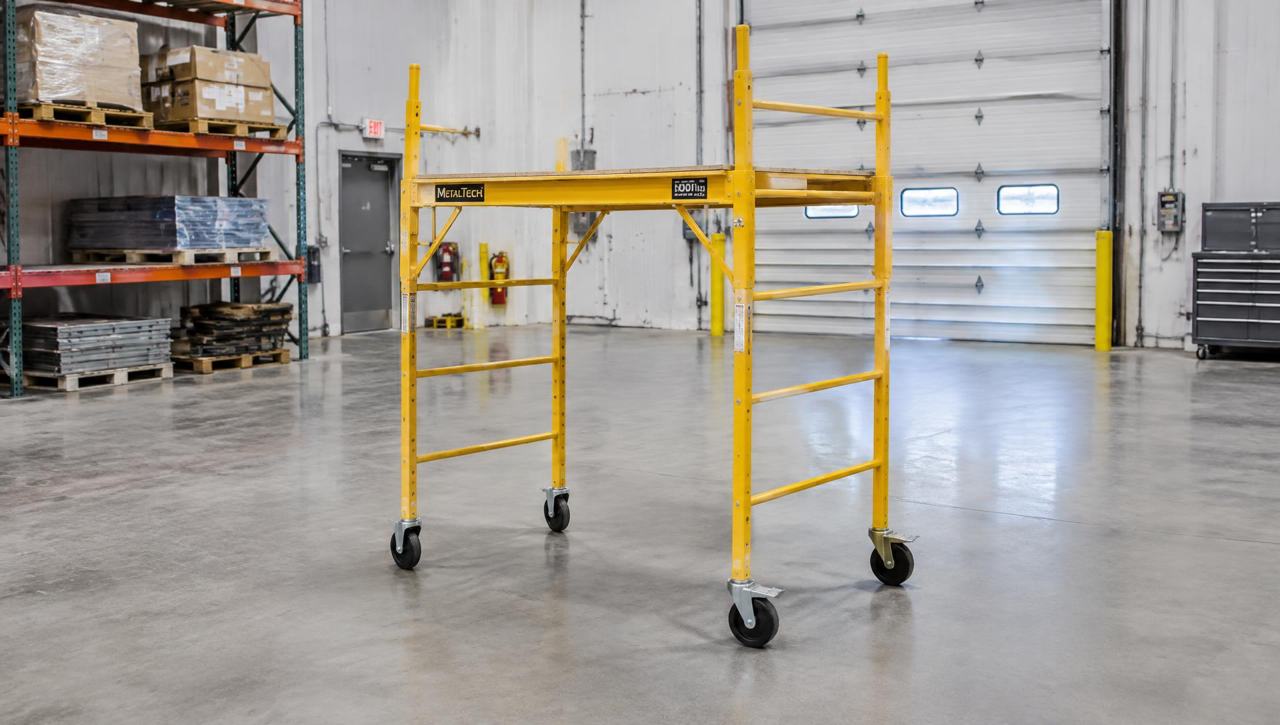
Mobile & Rolling Scaffolds: Move, Lock, Climb Safely
OSHA requirements for mobile and rolling tower scaffolds (Perry-type units): firm level surfaces, positive caster locks, the four-to-one height-to-base limit, platforms and guardrails, safe moving procedures, loading, power lines, weather, inspection, and training.
6 minutes8 scenes8-question quiz
What's covered
- 1.Mobile Scaffolds: What Makes Them Different
- 2.Firm, Level Surfaces
- 3.Casters and Wheel Locks
- 4.Height-to-Base Ratio and Outriggers
- 5.Platforms, Guardrails, and Access
- 6.Moving a Rolling Scaffold Safely
- 7.Loading, Power Lines, and Weather
- 8.Inspection, Training, and Recap
Key takeaways
- Mobile scaffolds follow all general scaffold rules plus 1926.452(w).
- Set and move rolling towers only on firm, level surfaces free of holes and debris.
- Lock every caster with positive wheel and swivel locks before anyone climbs.
- Keep height within four times the minimum base width, or restrain the unit; use outriggers per the manufacturer.
- Deck platforms fully and use guardrails above ten feet.
- Climb only the built-in access ladder, never the cross braces.
- No one rides during a move; push from as close to the base as practicable.
- Respect rated capacity, power line clearances, and stop for high winds.
- A competent person inspects casters, locks, pins, and braces before each shift.
- Training is required; this module is awareness, not compliance.
Every course includes
Professional narration, synced captions, a knowledge-check quiz, completion records, and certificates of completion for team learners. Works on phone, tablet, and computer.
This is awareness-level training only. It does not certify, qualify, or authorize anyone to perform work and does not by itself establish compliance. The employer is responsible for site-specific training, hands-on verification, and work authorization.