29 CFR 1910.178(h), (k), (m), (n); 1910.26; 1910.22; 1910.28; 1910.176; 1910.1000; ANSI MH30.1
Loading Dock & Trailer Safety
Dock hazards, wheel chocks and vehicle restraints, dock communication lights, dock levelers and dockboards, trailer floor and landing gear checks, forklift operation at docks, fall protection at dock edges, pedestrians and drivers, manual handling, carbon monoxide and weather, and dock procedures.
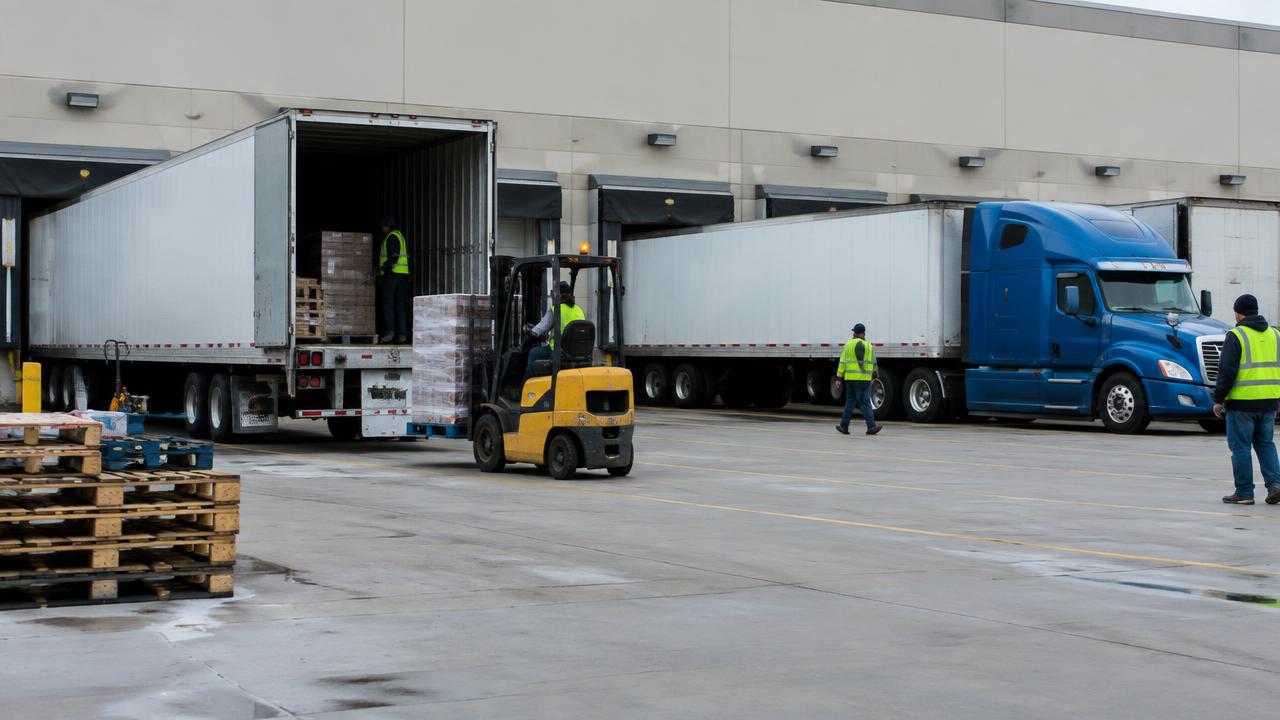
What's covered
- 1.Loading Dock & Trailer Safety
- 2.Major Dock Hazards
- 3.Securing the Trailer: Chocks and Restraints
- 4.Dock Communication Systems
- 5.Dock Levelers and Dockboards
- 6.Inspecting the Trailer Before Entry
- 7.Forklift Operation at the Dock
- 8.Fall Protection at Dock Edges
- 9.Pedestrians and Drivers at the Dock
- 10.Manual Handling and Pallet Jacks
- 11.Environmental Hazards at the Dock
- 12.Dock Safety Procedures and Responsibilities
Key takeaways
- Set brakes and chock wheels before any forklift boards a trailer.
- Verify vehicle restraints and dock lights yourself.
- Check trailer floors and support uncoupled trailers with jacks.
- Know leveler capacity and keep the lip fully engaged.
- Keep away from dock edges; close doors or use barriers when no trailer is present.
- Wear the seat belt; never jump from a tipping forklift.
- Separate pedestrians and drivers from forklift traffic.
- Control carbon monoxide, weather hazards, and housekeeping.
Every course includes
Professional narration, synced captions, a knowledge-check quiz, completion records, and certificates of completion for team learners. Works on phone, tablet, and computer.
This is awareness-level training only. It does not certify, qualify, or authorize anyone to perform work and does not by itself establish compliance. The employer is responsible for site-specific training, hands-on verification, and work authorization.