29 CFR 1910.178(g), (k), (m), (n); 1910.176(a); 1910.22(c); 1910.144–145; ANSI/ITSDF B56.1-2020; ANSI Z535
Forklift Pedestrian Safety
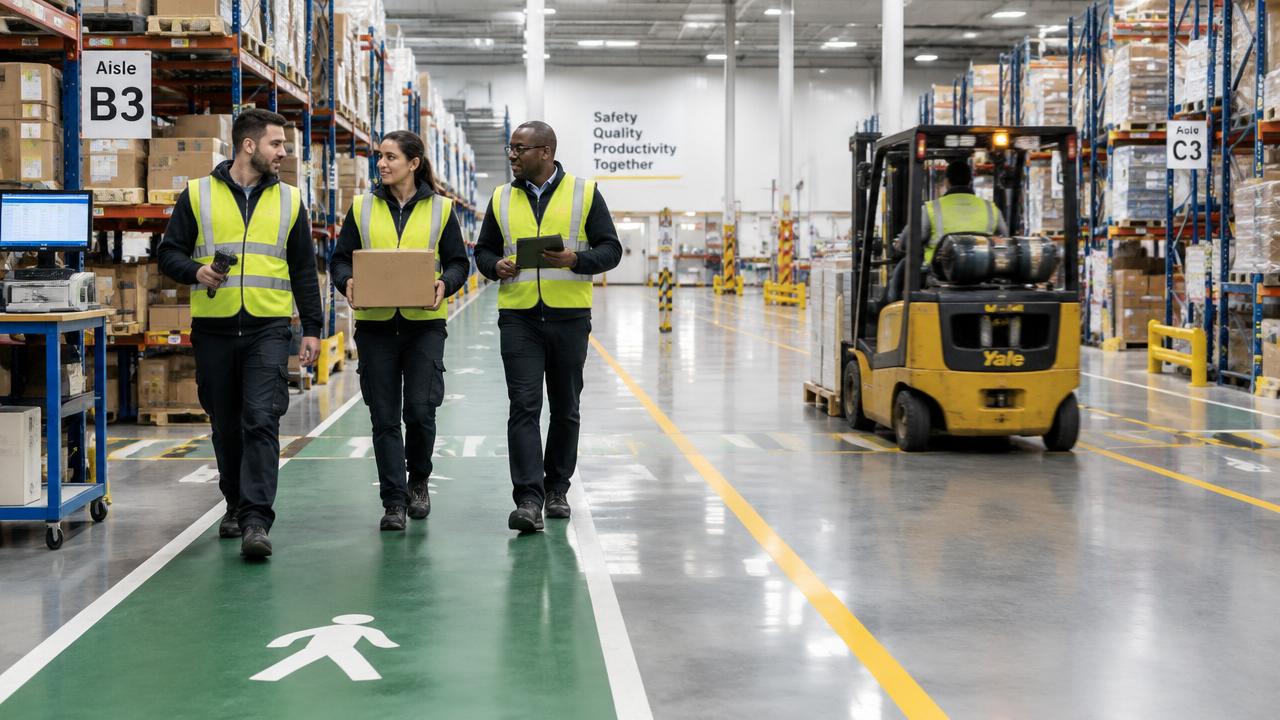
Pedestrian safety around forklifts: why trucks are dangerous, truck types, operator blind spots, OSHA operator rules that protect pedestrians, walkways and markings, intersections, safe distance and pinch points, elevated loads, docks, charging areas, and pedestrian responsibilities.
What's covered
- 1.Forklift Pedestrian Safety
- 2.Why Forklifts Are Dangerous to Pedestrians
- 3.Types of Powered Industrial Trucks
- 4.Operator Blind Spots
- 5.Rules Operators Must Follow — and What They Mean for You
- 6.Walkways, Aisles, and Markings
- 7.Intersections, Doorways, and Blind Corners
- 8.Keep Your Distance
- 9.Elevated Loads and Falling Objects
- 10.Docks, Ramps, and Trailers
- 11.Battery Charging and Fueling Areas
- 12.Your Responsibilities as a Pedestrian
Key takeaways
- Forklifts are heavy, quiet, rear-steering, and slow to stop.
- No eye contact means the operator cannot see you.
- Never stand or walk under elevated forks; never ride on forks or pallets.
- Use marked walkways and stop at intersections and doorways.
- Never stand between a forklift and a rack, wall, or dock.
- Stay out of trailers and aisles while trucks are working.
- Keep out of charging and fueling areas unless authorized.
- Report unsafe operation and near misses; this is not operator training.
Every course includes
Professional narration, synced captions, a knowledge-check quiz, completion records, and certificates of completion for team learners. Works on phone, tablet, and computer.
This is awareness-level training only. It does not certify, qualify, or authorize anyone to perform work and does not by itself establish compliance. The employer is responsible for site-specific training, hands-on verification, and work authorization.