29 CFR 1926 Subpart P; 1926.300; 1926.600–602; 1926.702; 1926.1424
Focus Four: Caught-In or -Between Hazards
An in-depth, awareness-level Focus Four course on caught-in or -between hazards: trench cave-ins, soil, protective systems, spoil and egress, rotating machinery, lockout, equipment swing radius, pinning, rollovers, material collapse, and engulfment.
28 minutes27 scenes15-question quiz
What's covered
- 1.Focus Four: Caught-In or -Between Hazards
- 2.How Caught-In and -Between Incidents Happen
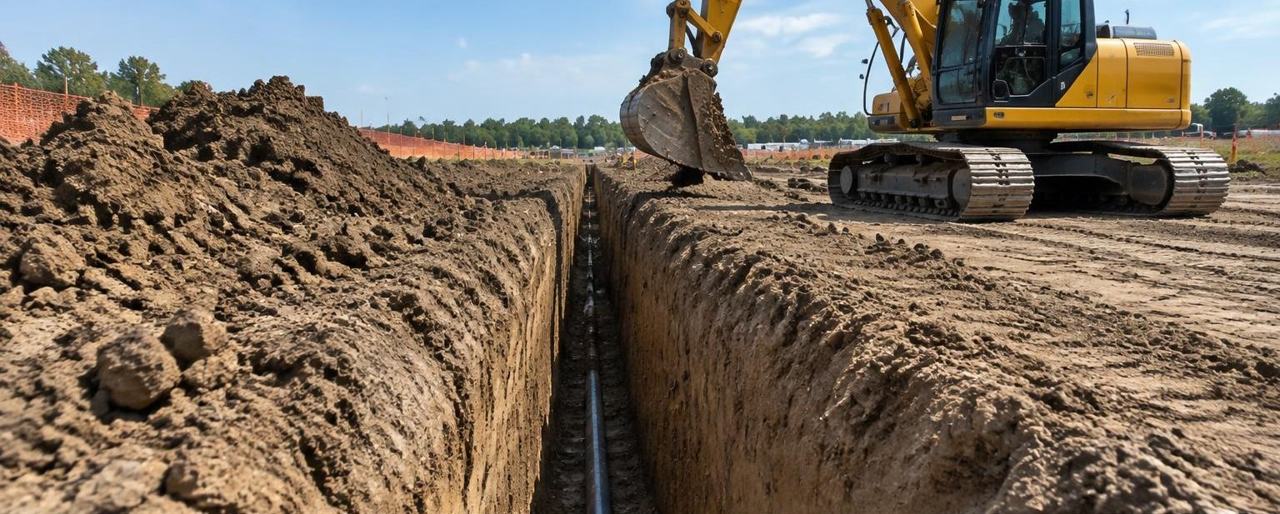
- 3.Trench Cave-Ins: Why They Kill
- 4.The Competent Person and Daily Inspections
- 5.Protective Systems and the Five-Foot Rule
- 6.Soil Types and Sloping
- 7.Shoring, Shields, and Trench Boxes
- 8.Spoil Piles, Access, and Egress
- 9.Water, Utilities, and Hazardous Atmospheres
- 10.Machinery: Rotating Parts and Pinch Points
- 11.Concrete Mixers, Pumps, and Conveyors
- 12.Lockout and Equipment Energy Control
- 13.Heavy Equipment Swing Radius
- 14.Pinned Between Vehicles and Fixed Objects
- 15.Rollovers, ROPS, and Seat Belts
- 16.Forklifts, Lifts, and Overhead Crushing
- 17.Material Collapse and Storage
- 18.Hand Tools and Power Tools: Pinch Points
- 19.Confined Spaces and Engulfment
- 20.Case Study: The Five-Minute Trench Check
- 21.Case Study: Clearing the Jam
- 22.Case Study: Pinned at the Trench Box
- 23.Mechanical Excavation Near Workers
- 24.Utility and Road Equipment: Rollers and Pavers
- 25.Pre-Task Planning for Caught-In Hazards
- 26.Supervisor Responsibilities for Caught-In Hazards
- 27.Stay Out of the Danger Zone: Recap
Key takeaways
- Caught-in or -between means being squeezed, crushed, pinched, or buried.
- Protect trenches five feet or deeper; over twenty feet requires a PE design.
- A competent person inspects excavations daily and after rain.
- Keep spoil at least two feet back; egress within twenty-five feet at four feet deep.
- Guard rotating parts and never bypass guards.
- Lock out equipment before maintenance, cleaning, or clearing jams.
- Barricade and stay out of equipment swing radiuses.
- Buckle up in equipment with ROPS and never jump during a rollover.
- Stack and brace materials so they cannot collapse.
- This awareness course does not designate a competent person or authorize lockout.
Every course includes
Professional narration, synced captions, a knowledge-check quiz, completion records, and certificates of completion for team learners. Works on phone, tablet, and computer.
This is awareness-level training only. It does not certify, qualify, or authorize anyone to perform work and does not by itself establish compliance. The employer is responsible for site-specific training, hands-on verification, and work authorization.