29 CFR 1910.106 — Flammable liquids; 1910.1200 — Hazard Communication
Flammable and Combustible Liquids for General Industry
Approximately 40 minutes of OSHA-aligned awareness covering fire and explosion hazards, definitions and flash points, current categories, ignition and static control, approved containers, cabinets, inside storage rooms, building storage, scoped quantities, ventilation, safe handling, fire control, and spills. Workplace-specific training remains required.
What's covered
- 1.Flammable and Combustible Liquids: General Industry
- 2.OSHA Scope and the Actual Operation
- 3.Primary and Technical Definitions
- 4.Current Categories and Legacy Combustible Terms
- 5.Flash Points, Temperature, and Heating
- 6.Vapors and Flammable Limits
- 7.How Fires and Explosions Develop
- 8.Labels and Safety Data Sheets
- 9.Control of Ignition Sources and Hot Work
- 10.Static Electricity, Bonding, and Grounding
- 11.Storage Containers and Safety Cans
- 12.Safe Dispensing and Transfer Practices
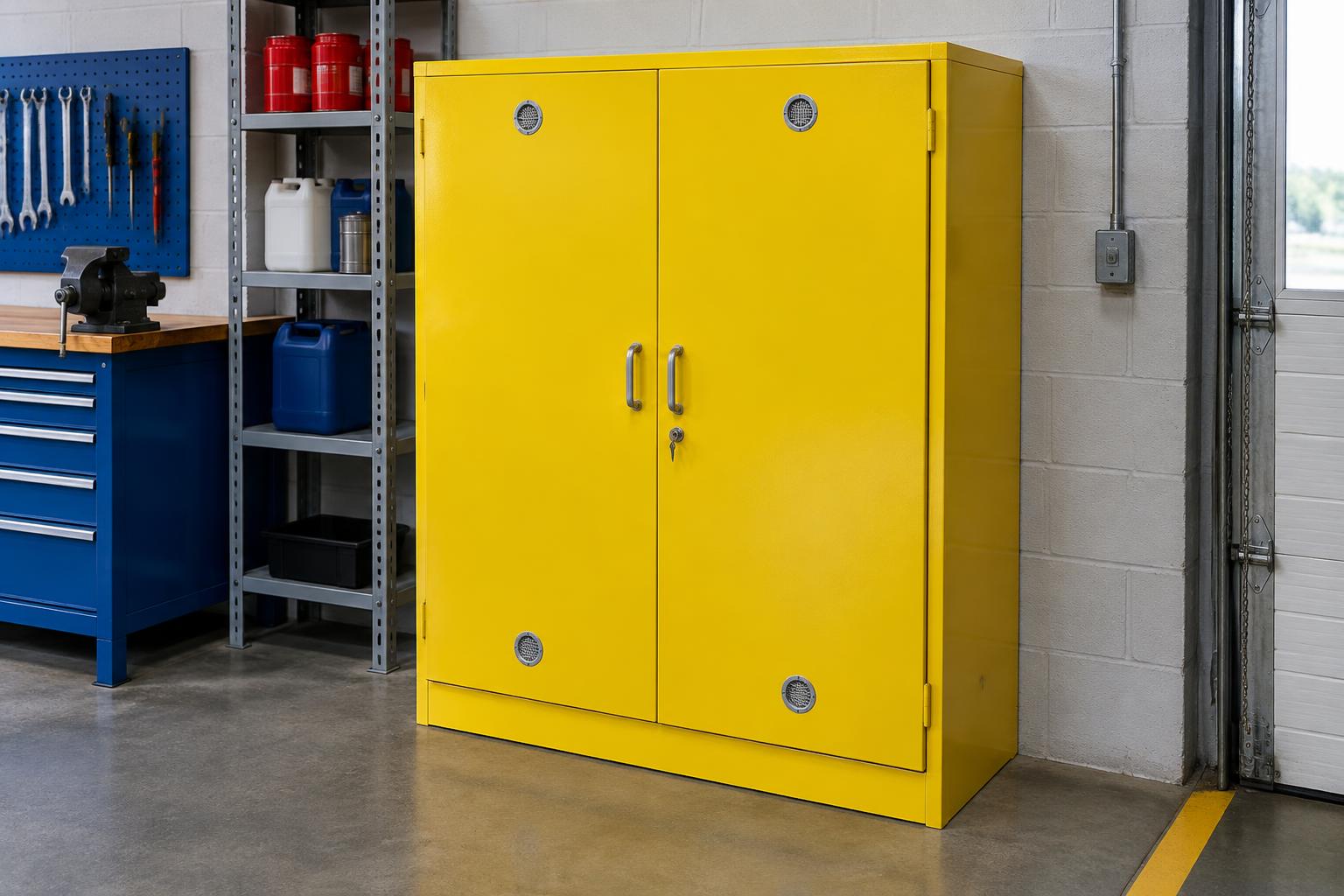
- 13.Flammable Liquid Storage Cabinets
- 14.Inside Storage Rooms — Not Ordinary Strong Rooms
- 15.Ventilation and Electrical Equipment
- 16.Storage Inside Buildings and General Storage
- 17.Quantity Limits and Incidental Industrial Use
- 18.Safe Handling and Personal Protection
- 19.Housekeeping, Waste, and Empty Containers
- 20.Spill Recognition and Response Boundaries
- 21.Fire Control and Protection Equipment
- 22.Fire Emergencies, Evacuation, and Accountability
- 23.Practice: Recognize the Unsafe Decision
- 24.Employer Follow-Through and Final Review
Key takeaways
- Identify the product and category from its label and SDS; legacy combustible terms do not exactly match current categories.
- Flash point is not a safe operating limit. Review heating, spray generation, and changed process conditions.
- Prevent vapor accumulation and ignition together; ordinary electrical equipment and hot work may introduce ignition.
- Use approved compatible containers and permitted transfers. Never transfer by applying air pressure to a container or portable tank.
- Follow required nozzle-container electrical interconnection and the evaluated bonding/grounding setup.
- Cabinet, container, room, and incidental-use quantity limits have different scopes; verify the applicable provision and inventory.
- A locked strong room is not necessarily an approved inside storage room. Maintain containment, fire doors, ventilation, and aisles.
- Select chemical-specific PPE, manage contaminated waste, and remember that empty containers can retain flammable residues.
- Handle only evaluated incidental releases within trained capability; withdraw and activate the plan for emergencies.
- Passing this quiz does not authorize firefighting or emergency response or establish compliance; employer-specific preparation remains required.
Every course includes
Professional narration, synced captions, a knowledge-check quiz, completion records, and certificates of completion for team learners. Works on phone, tablet, and computer.
This is awareness-level training only. It does not certify, qualify, or authorize anyone to perform work and does not by itself establish compliance. The employer is responsible for site-specific training, hands-on verification, and work authorization.