29 CFR 1910.252(a); 29 CFR 1926.352; NFPA 51B (2024); NFPA 241 (2027); NFPA 25 (2026) Ch. 15; NFPA 72 (2025); IFC 901.7
Fire Watch Training: Hot Work and System Impairments
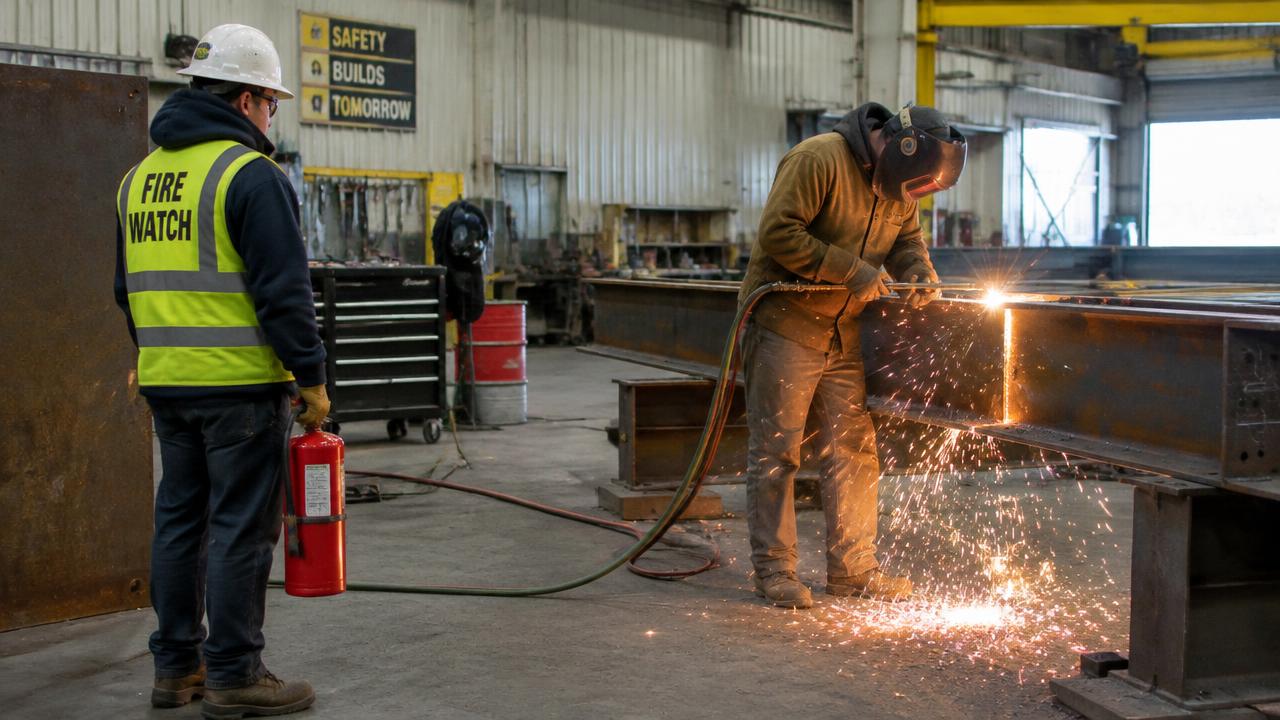
Fire watch awareness under OSHA 1910.252 and 1926.352, NFPA 51B, NFPA 25, NFPA 72, and fire codes: roles, when a fire watch is required, hot work permits, area preparation, equipment, duties during and after hot work, fire response, impairment procedures, patrols, documentation, and practical scenarios.
What's covered
- 1.Fire Watch Training
- 2.Regulations and Standards
- 3.Roles in a Hot Work Program
- 4.When a Fire Watch Is Required
- 5.The Hot Work Permit
- 6.Preparing the Hot Work Area
- 7.Equipment and Readiness
- 8.During Hot Work
- 9.Responding to a Fire
- 10.After Hot Work Ends
- 11.Fire Protection System Impairments
- 12.When Impairments Require a Fire Watch
- 13.Conducting Impairment Patrols
- 14.Documentation and Communication
- 15.Scenarios: Hot Work Fire Watch
- 16.Scenarios: Impairments and Wrap-Up
Key takeaways
- A fire watch is a trained, dedicated person who watches for fire during hot work and system impairments.
- Fire watches are required when combustibles, openings, or conductive surfaces are within the 35-foot hazard zone.
- Keep a charged extinguisher ready, know how to sound the alarm, and never take on distracting duties.
- Extinguish only fires clearly within your equipment’s capacity; otherwise sound the alarm and evacuate.
- Stay at least 30 minutes after hot work under OSHA and at least one hour under current NFPA 51B, plus any required monitoring.
- Sprinkler impairments over 10 hours and alarm impairments over 4 hours in 24 require evacuation or an approved fire watch.
- Log every watch and patrol honestly and hand off in person.
- This course does not make a workplace compliant; your employer provides site-specific fire watch training.
Every course includes
Professional narration, synced captions, a knowledge-check quiz, completion records, and certificates of completion for team learners. Works on phone, tablet, and computer.
This is awareness-level training only. It does not certify, qualify, or authorize anyone to perform work and does not by itself establish compliance. The employer is responsible for site-specific training, hands-on verification, and work authorization.