49 CFR 172.700–704; 172 Subparts D–G; 172.800–802
DOT Hazmat General Awareness, Safety, and Security Awareness
An expanded three-section course with detailed DOT recognition, material-specific safety boundaries, shipment protection, and practical decision scenarios with narrated debriefs. Employer-specific safety measures, function-specific training, and applicable security-plan instruction remain required.
What's covered
- 1.General Awareness • DOT Hazmat Training
- 2.Who Is a Hazmat Employee?
- 3.The Five Training Elements
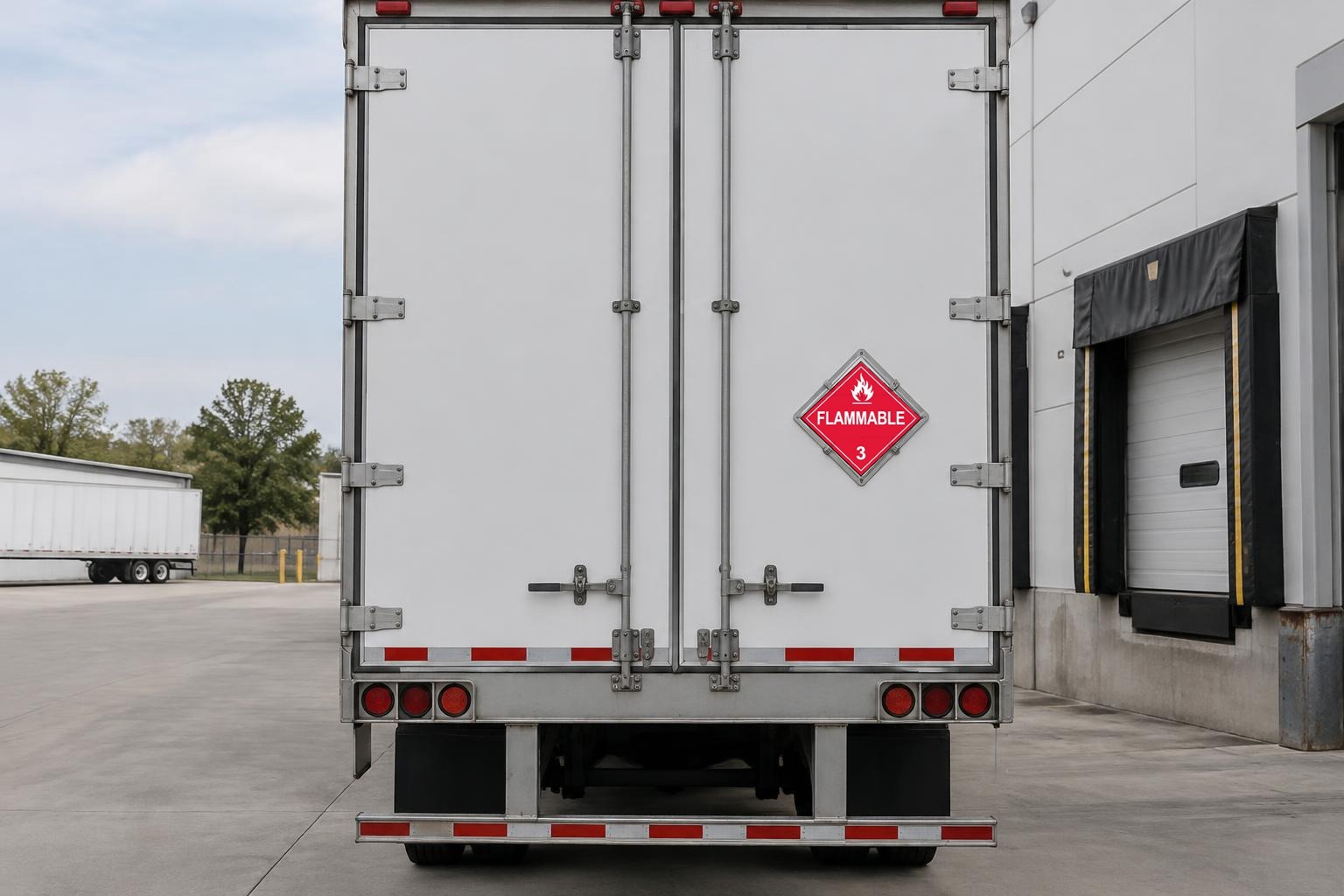
- 4.Recognizing Hazardous Materials in Transportation
- 5.Hazard Classes 1 Through 4
- 6.Hazard Classes 5 Through 9
- 7.Markings, Labels, Placards, and OSHA Symbols
- 8.Safety Data Sheets and Workplace Instructions
- 9.General Awareness • Following a Shipment Through the HMR
- 10.General Awareness • Mapping Duties and Training Gaps
- 11.General Awareness • Hazard Classes, Subsidiary Risks, and Compatibility
- 12.General Awareness • Reading Markings Without Guessing
- 13.General Awareness • Shipping Papers and Emergency Information
- 14.General Awareness • Packaging Marks and Condition
- 15.General Awareness • Limited Quantities and Exceptions
- 16.General Awareness • Batteries, Aerosols, and Familiar Products
- 17.General Awareness • Empty Packages, Residue, and Waste
- 18.General Awareness • A Complete Recognition Handoff
- 19.General Awareness • Modes, Interfaces, and Changing Conditions
- 20.General Awareness • Special Marks and Recognition Boundaries
- 21.General Awareness • Training, Testing, and Employer Records
- 22.Safety • Protecting Yourself From Exposure
- 23.Preventing Package-Handling Accidents
- 24.Release Recognition and Safe Withdrawal
- 25.Safety • Material-Specific Exposure Routes
- 26.Safety • Planning Safe Package Movement
- 27.Safety • Damage, Wetness, and Uncertain Odors
- 28.Safety • Fire, Pressure, and Ignition Sources
- 29.Safety • Loading Areas and Vehicle Interfaces
- 30.Safety • Using Emergency Response Information
- 31.Safety • Evacuation, Accountability, and Assistance
- 32.Safety • Incidental Release Versus Emergency Response
- 33.Safety • Shift Handoffs and Near-Miss Learning
- 34.Safety • Integrated Dock Incident Exercise
- 35.Safety • Site-Specific Protection Briefing
- 36.Safety • Unattended Packages and Combined Concerns
- 37.Security • Transportation Security Awareness
- 38.Recognizing Suspicious Activity
- 39.False Instructions and Shipment Information
- 40.Responding to a Possible Threat
- 41.Employer Follow-Through and Final Review
- 42.Security • Risk Awareness Without Profiling
- 43.Security • Layered Shipment Protection
- 44.Security • Carrier and Pickup Verification
- 45.Security • Seals, Locks, and Signs of Tampering
- 46.Security • Information Protection and Social Engineering
- 47.Security • Unexpected Route or Destination Changes
- 48.Security • Unauthorized Access and Safe Escalation
- 49.Security • Threat Reporting and Useful Facts
- 50.Security • Security Plans and Employee-Specific Duties
- 51.Security • Integrated Shipment Protection Exercise
- 52.Security • After-Hours and Contractor Handoffs
Key takeaways
- Duties, not job titles, determine hazmat training applicability. Work only within your actual preparation and authorization.
- This combined course supports general awareness, safety, and security awareness; it does not replace applicable function-specific or in-depth security training.
- Recognize hazard classes, package markings, labels, placards, and shipping information. OSHA GHS symbols are not universal DOT replacements.
- Do not infer that a shipment is unregulated from missing placards, a familiar product name, or SDS Section 14 alone.
- Use employer-specified material hazards, protective measures, handling methods, and emergency arrangements. Do not investigate unknown leaks or improvise cleanup.
- Verify access, carrier authority, shipment condition, and seal information where used through the approved procedure.
- Report suspicious behavior and discrepancies factually; do not profile, confront, pursue, or investigate suspected threats.
- Verify unexpected shipment changes through established trusted contacts and protect credentials and cargo information.
- Immediate danger requires moving to safety and making emergency notification; ordinary concerns follow the defined reporting and backup channels.
- Security-plan applicability requires checking 172.800; covered employees need their employer’s actual plan-specific instruction.
- Initial training generally finishes within 90 days under applicable supervised-work conditions; recurrence under 172.704 is at least every three years, with other requirements checked.
- Employer training, testing, certification, and complete records remain necessary. Course completion does not establish compliance or DOT certification.
Every course includes
Professional narration, synced captions, a knowledge-check quiz, completion records, and certificates of completion for team learners. Works on phone, tablet, and computer.
This is awareness-level training only. It does not certify, qualify, or authorize anyone to perform work and does not by itself establish compliance. The employer is responsible for site-specific training, hands-on verification, and work authorization.