OSHA 29 CFR 1910.101 / 1910.253
Compressed Gas Cylinders: Store, Move, Use Safely
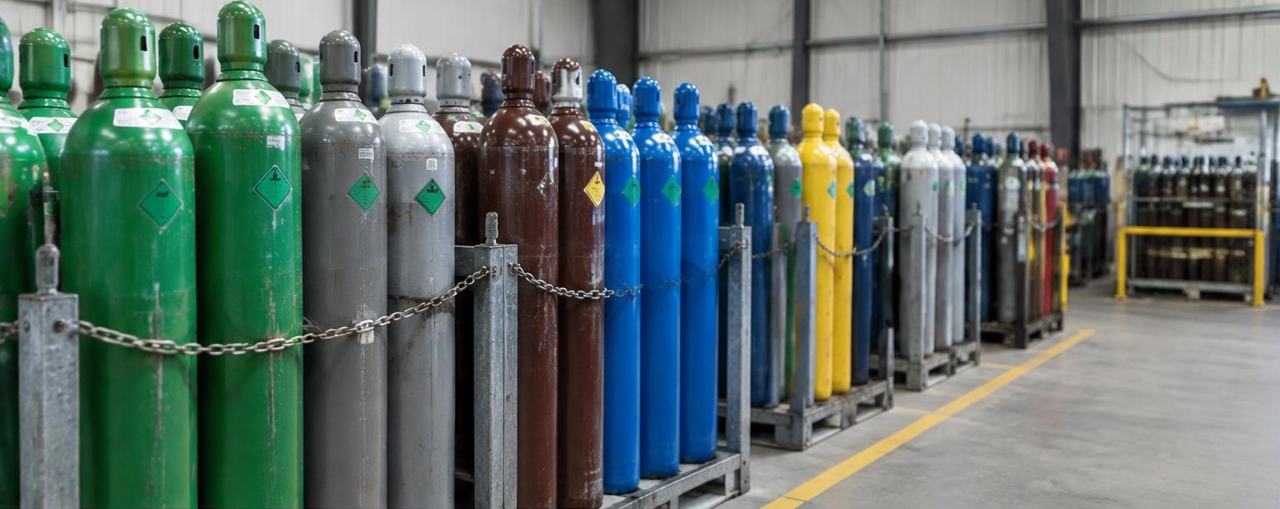
Awareness training on compressed gas cylinders: identifying contents, securing cylinders, oxygen and fuel gas separation, moving and hoisting, damaged cylinders, regulators and leaks, and handling empty cylinders.
6 minutes7 scenes10-question quiz
What's covered
- 1.Compressed Gas Cylinders
- 2.Secure Every Cylinder
- 3.Separation and Heat
- 4.Moving Cylinders Safely
- 5.What Never to Do
- 6.Regulators, Valves, and Leaks
- 7.Empty Cylinders and Recap
Key takeaways
- Identify contents by the label, never the color.
- Secure every cylinder upright with a chain at the upper third.
- Separate oxygen from fuel gas by 20 feet or a 5-foot, half-hour fire-rated barrier.
- Keep oil and grease away from oxygen equipment.
- Cap and cart cylinders to move them; never lift by the cap.
- Never drop, roll on the side, or misuse a cylinder.
- Remove damaged cylinders from use.
- Stand aside and open valves slowly; leak check with soapy water.
- Treat empty cylinders like full ones.
- This is awareness training; your employer owns site-specific procedures.
Every course includes
Professional narration, synced captions, a knowledge-check quiz, completion records, and certificates of completion for team learners. Works on phone, tablet, and computer.
This is awareness-level training only. It does not certify, qualify, or authorize anyone to perform work and does not by itself establish compliance. The employer is responsible for site-specific training, hands-on verification, and work authorization.