OSH Act 5(a)(1); 29 CFR 1910.132; 8 CCR 3203, 3653; ANSI/SVIA 1-2023; ANSI/ROHVA 1-2023; 16 CFR 1420
ATV & UTV Safety
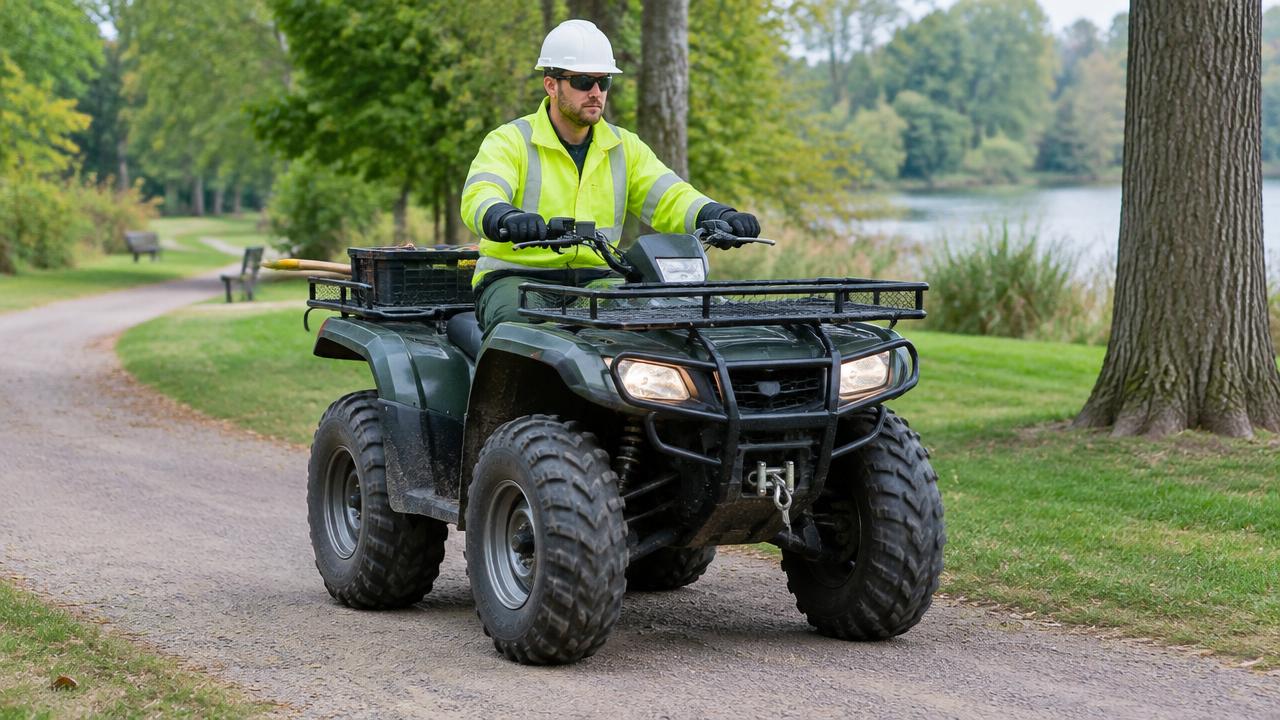
ATV and UTV hazards for work crews: the difference between ATVs and side-by-sides, rollovers and ejection, protective gear and seat belts, pre-ride inspection, hills and slopes, passengers, hauling and towing, roads and water, parking and fueling, and working alone.
What's covered
- 1.ATV & UTV Safety: Scope
- 2.ATV or UTV: Know the Difference
- 3.The Main Hazards
- 4.Protective Gear
- 5.Pre-Ride Inspection
- 6.Hills and Slopes
- 7.Passengers
- 8.Hauling and Towing
- 9.Roads, Water, and Visibility
- 10.Parking, Fueling, and Shutdown
- 11.Working Alone and Emergencies
- 12.Authorized Riders and Takeaways
Key takeaways
- Follow the labels for passenger, age, and load limits; most work ATVs are one-rider machines.
- Wear the helmet and gear your employer specifies, and always fasten the UTV seat belt.
- Inspect tires, brakes, throttle, and lights before every ride.
- Drive straight up and down slopes, never turn sharply on a hill, and keep speed down in tall grass.
- No riders in the cargo bed; keep hands and feet inside during a tip-over.
- Keep loads low, secured, and under rated limits; refuel with the engine off.
- Have a check-in plan when working alone; this course does not authorize anyone to ride.
Every course includes
Professional narration, synced captions, a knowledge-check quiz, completion records, and certificates of completion for team learners. Works on phone, tablet, and computer.
This is awareness-level training only. It does not certify, qualify, or authorize anyone to perform work and does not by itself establish compliance. The employer is responsible for site-specific training, hands-on verification, and work authorization.