OSHA 29 CFR 1910.67; construction: 1926.453
Aerial Lift Safety: Plan, Protect, Operate
Build awareness of the hazards that can arise before, during and after boom-lift work. These narrated lessons cover equipment familiarization, pre-use checks, ground assessment, fall protection, overhead hazards, load limits, weather, travel and emergency planning.
Who this course is for
Maintenance and construction employees, prospective aerial lift operators, and supervisors
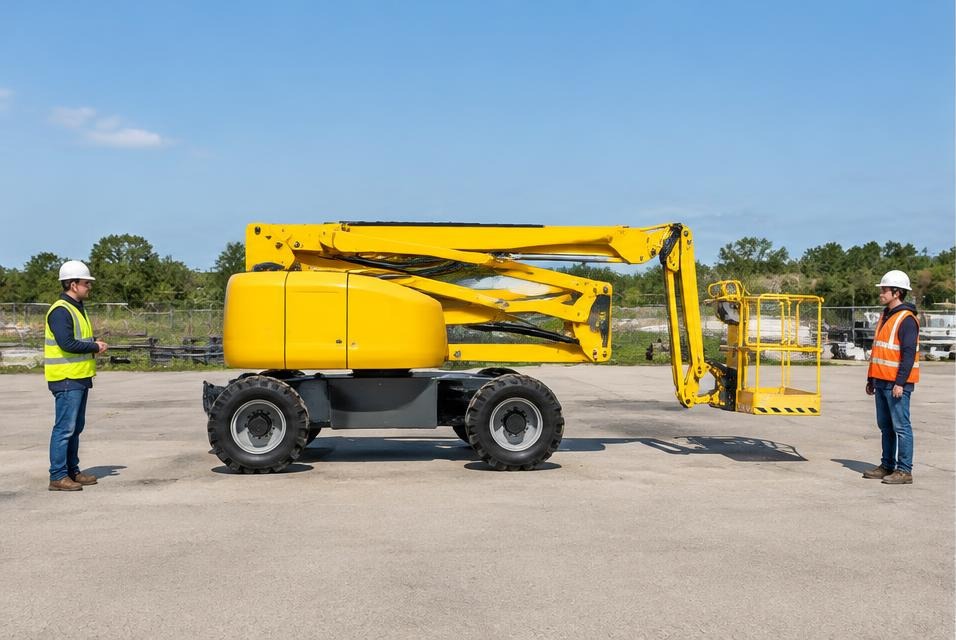
This course focuses on boom-type aerial lifts. It distinguishes boom lifts from scissor lifts rather than treating every elevated platform as the same equipment. Use it to support your employer’s equipment-specific instruction, not as operator certification or permission to operate.
The listed duration is a course estimate. Pauses, review and the knowledge check can add time.
What's covered
- 1.Aerial Lifts: Plan Before Elevating
- 2.Training and Equipment Familiarization
- 3.Inspect Before Each Shift
- 4.Assess Ground and Stabilize
- 5.Use the Correct Fall Protection
- 6.Enter Safely and Stay Inside
- 7.Avoid Electrical and Crush Hazards
- 8.Respect Capacity and Weather Limits
- 9.Travel, Park, and Secure
- 10.Prepare for Emergencies and Recheck
Key takeaways
- Identify the equipment type and follow its actual manual and applicable standards.
- Operate only after employer-required training, familiarization, and authorization.
- Inspect before use, test controls daily, and remove unsafe equipment from service.
- Assess ground capacity, route hazards, and required stabilization.
- Use compatible personal fall protection on designated boom or basket anchors; body belts are not fall-arrest equipment.
- Stay on the basket floor and reposition rather than climb or overreach.
- Verify electrical clearance and avoid overhead crushing hazards.
- Respect capacity, weather, slope, and elevated-travel limits; plan emergency lowering and rescue.
Every course includes
Professional narration, synced captions, a knowledge-check quiz, completion records, and certificates of completion for team learners. Works on phone, tablet, and computer.
Course questions
- Does this course certify me to operate an aerial lift?
- No. It is awareness-level education. Your employer must provide the instruction, equipment familiarization, hands-on verification and authorization that apply to your actual work.
- Does it cover scissor lifts?
- It explains the distinction, but its main focus is boom-type aerial lifts. Scissor-lift hazards and applicable procedures need their own equipment-specific training.
- What does the knowledge check cover?
- Equipment identification, trained operation, inspections, stable setup, fall protection, electrical hazards, capacity, travel and emergency readiness. The quiz checks awareness; it is not a practical operating evaluation.
This is awareness-level training only. It does not certify, qualify, or authorize anyone to perform work and does not by itself establish compliance. The employer is responsible for site-specific training, hands-on verification, and work authorization.